Pont des Tuves: A Hidden Stone Bridge Between Seillans and the Siagne
Dernière mise à jour : 6 mai
Tucked away between forest trails and the clear waters of the Siagne River, the Pont des Tuves is one of the most quietly remarkable landmarks in the eastern Var.
Less monumental than famous Provençal sites, yet deeply atmospheric, this historic stone bridge offers something rarer: immersion. Surrounded by oak trees, limestone rocks and flowing water, it feels untouched, suspended between heritage and wilderness.
Located just below the hilltop village of Seillans, it is one of those places that reveals a different side of Provence, slower, cooler, more discreet.
Table of Contents

There are places in Provence that you discover by accident and then return to deliberately.
There are places in Provence that you discover by accident, and then return to deliberately.
For me, the Pont des Tuves is one of them.
Hidden below the hilltop village of Seillans, this old stone bridge stretches gently across the Siagne River, surrounded by forest and pale limestone rocks. It is not a monument in the grand sense. It does not announce itself with signage or spectacle. And perhaps that is precisely why it feels so special.
The first time I walked down to the bridge, I wasn’t expecting anything remarkable. The path winds quietly through trees, the air becomes cooler, and then the sound of water begins to guide you. When the arches finally appear between the branches, there is a moment of stillness — as if you have stepped into a scene that has remained unchanged for centuries.
When I bring clients or friends here for the first time, their reaction is almost always the same: surprise. They expect Provence to be golden stone villages and open terraces, and suddenly they find themselves in shade, beside clear water, under the arch of a centuries-old bridge. Provence feels wilder here, cooler, more intimate. The scale shifts. The pace slows.
What touches me most is how natural everything feels. The bridge does not dominate the landscape; it belongs to it. The stone seems to echo the cliffs along the riverbank. The trees lean toward the water. In summer, the river pools beneath the arches, and families sit quietly along the edges, children discovering the pleasure of cold water against warm skin.
It is in places like this that Provence reveals another dimension, one that cannot be captured from a panoramic viewpoint, but only experienced on foot, step by step, in the shade of the valley.

A Bridge That Belongs to the Landscape
The Pont des Tuves dates back to the 18th century, built in stone with elegant arches that seem to rise naturally from the riverbanks. Its proportions are simple, balanced, almost understated, yet the craftsmanship reveals a time when even rural infrastructure was built with care and intention.
What moves me most is how seamlessly it blends into its surroundings. There is no separation between architecture and nature, only continuity. The stone echoes the tones of the limestone cliffs. Moss and vegetation soften its edges. The river flows quietly beneath it, as it has for centuries.
Over the years, it has become:

🌿 A peaceful walking destination
A place where the descent through the forest slows your pace, inviting you to notice light, scent, and sound before you even reach the water.

💧 A summer swimming spot
Natural pools form beneath the arches, offering clear, refreshing water during the warmest months, shaded and intimate compared to larger river sites.

🧺 A quiet picnic location
Flat stones and shaded banks create simple, natural resting spots where conversations stretch easily into the afternoon.
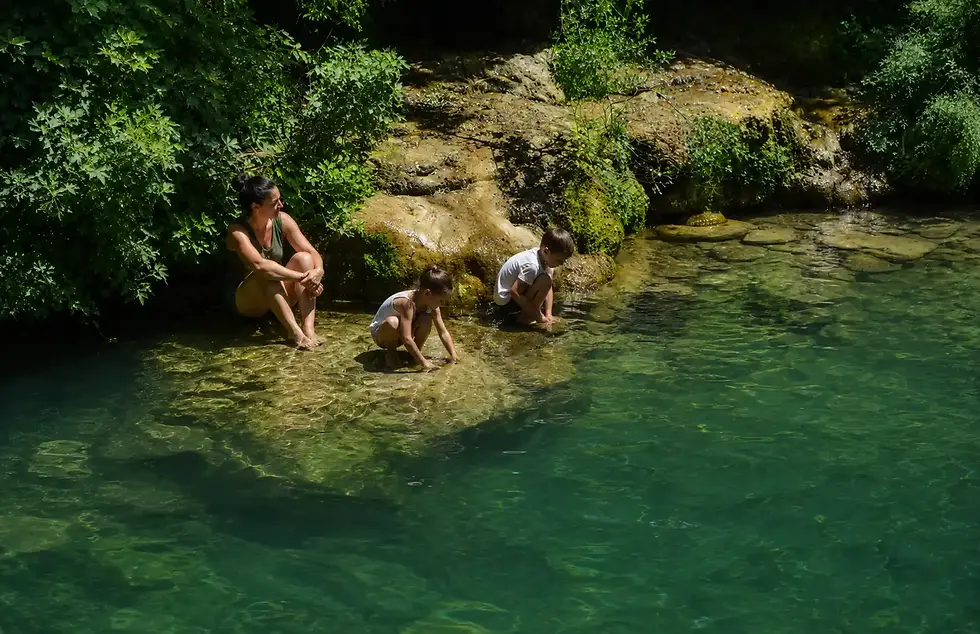
👣 A place where children discover the river for the first time
Watching them step cautiously into cool water, balancing on smooth rocks, reminds you how elemental this landscape still is.

📷 A photographer’s retreat
Morning light filtering through the trees, reflections on the water, and the curve of the arches create endlessly changing compositions.
It never feels staged. There are no dramatic viewpoints or grand entrances. It simply exists — and you enter its rhythm. The longer you stay, the more you realise that its beauty lies not in spectacle, but in balance.
The Walk Down
Reaching the bridge requires a short walk through shaded forest paths. I always tell visitors to take their time.
You descend gradually, and the air becomes cooler. The scent of pine and wild herbs fills the trail. Then suddenly, you hear the water before you see it.
In summer, the Siagne forms clear natural pools beneath the arches. It is one of the most refreshing places in the region — especially during the warmest months.
Seillans Above
Just above the valley stands Seillans, one of the most beautiful hilltop villages in the region.
The contrast between the elevated stone streets of the village and the freshness of the river below is something I always find striking. Many visitors explore Seillans for its charm and viewpoints — and then discover that, only minutes away, the Pont des Tuves offers a completely different atmosphere.
If you would like to explore the village itself in more detail, you can read: Seillans – One of the Most Beautiful Villages of France
Together, the village and the bridge tell a fuller story of the landscape.
Part of the Pays de Fayence
The Pont des Tuves is not an isolated stop — it belongs to a broader territory defined by perched villages, open valleys, and understated beauty.
When I speak about this region, I often refer to it as one coherent landscape rather than separate destinations.
To explore more of these water-shaped environments and hidden spots, you can continue with our article on natural wonders of the Pays de Fayence, which brings together some of the most distinctive landscapes in the area.
The bridge is simply one chapter in that story.
When I Recommend Visiting
Each season offers something different.
🌸 In spring, the river flows stronger and wildflowers surround the path.
☀️ In summer, it becomes a shaded retreat from the heat.
🍂 In autumn, golden leaves reflect in the water.
❄️ In winter, the stone structure feels almost sculptural in the quiet light.
Early morning or late afternoon are my favourite moments — when the light softens and the place feels almost suspended.
Why It Matters
For many of our clients discovering this part of Provence, the Pont des Tuves is a turning point.
It shows that the region is not only about postcard villages or coastal glamour. It is also about quiet places, where stone, water and forest meet naturally.
At Var Villas Management, we often say that understanding a territory begins with walking it. The Pont des Tuves is one of those walks that helps you feel what living here truly means.
Not spectacular.Not crowded.Just quietly authentic.
A Personal Note 💬
💡My advice
Wear comfortable walking shoes — the path down to the Pont des Tuves is shaded but uneven in places. In summer, bring water and arrive early to enjoy the river before the warmest hours. Parking is limited, so visiting in the morning or late afternoon offers both easier access and softer light.
🌍 Did you know?
The Pont des Tuves marks the historic boundary between two departments — the Var and the Alpes-Maritimes. Standing on the bridge, you are quite literally between territories, which explains its long-standing role as a rural crossing point in the region.


Commentaires