Renovating the Pool of Your Provence Home: What You Should Know
Dernière mise à jour : 20 mai
A swimming pool is often one of the reasons people fall in love with Provence in the first place. Long sunny afternoons, outdoor dinners that stretch late into the evening, children playing in the water during summer holidays… in many Provençal homes, the pool naturally becomes the centre of daily life.
But Provence’s climate, while ideal for enjoying a pool, can also accelerate wear over time. Strong UV exposure, heat, hard water, pine trees and long periods of inactivity in second homes all place particular stress on pools and their equipment.
For many homeowners, especially international buyers managing a property from abroad, renovation eventually becomes less about luxury and more about preserving comfort, safety, efficiency and long-term property value.
Whether your pool simply needs refreshing or requires a more complete transformation, here is what homeowners should know before starting a swimming pool renovation project in Provence.
Summary

1. How the Provençal Climate Affects Your Pool
Provence’s climate is ideal for pool owners: warm temperatures, sunshine for more than 300 days a year, and a long bathing season. However, these same conditions accelerate natural wear:
Intense UV Exposure
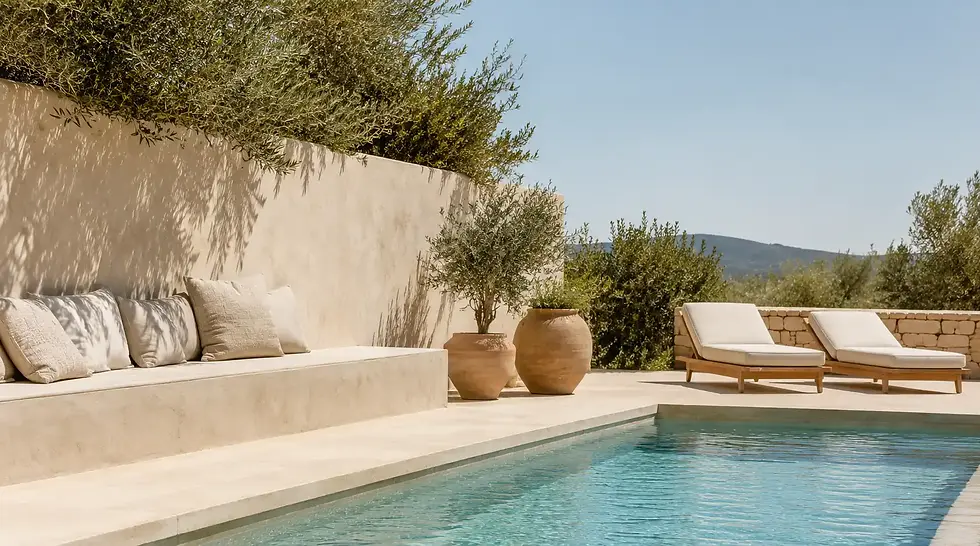
Under the strong Provençal sun, pool liners and coatings are constantly exposed to UV rays. Over time, colours may fade, surfaces can become brittle, and materials gradually lose flexibility and resistance.
High Temperatures
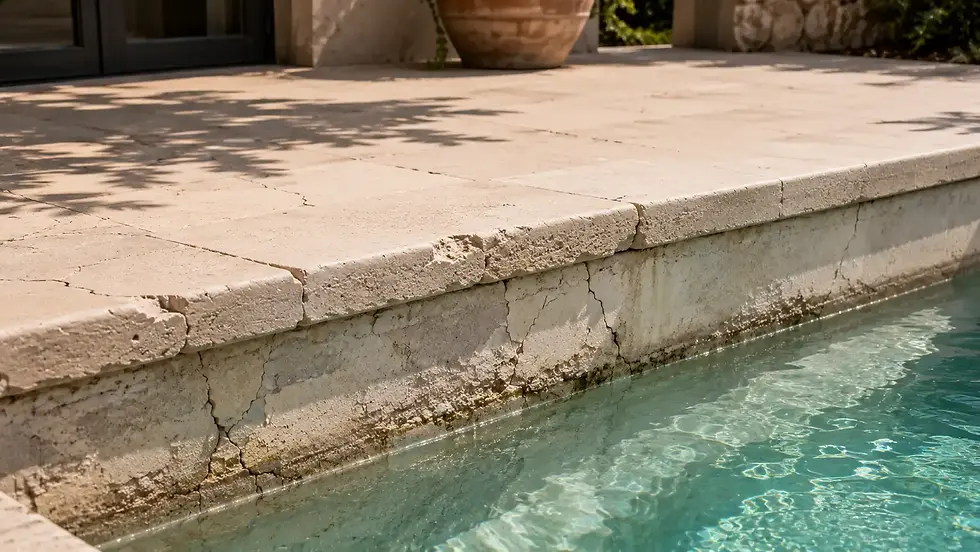
Repeated heat and temperature variations naturally cause expansion and contraction in stone, concrete and pool structures. This can slowly lead to cracks, movement or premature wear around the pool area.

Hard, Mineral-Rich Water
In many parts of Provence, hard water contains high levels of minerals and limestone. This often accelerates scaling, affects filtration systems and increases long-term maintenance needs.

Pine Trees, Plants and Pollen
In Provence, regular maintenance becomes particularly important during windy or high-pollen periods, especially for second homes left unattended for several days. We also share practical maintenance advice and common mistakes to avoid in our guide on how to maintain your pool easily.
Understanding these factors helps owners anticipate maintenance needs and plan renovations before problems become costly.
2. Signs That Your Pool Needs Renovation
Some issues can be repaired individually, while others indicate the pool would benefit from a full refurbishment. Common warning signs include:
💧 Persistent or Unexplained Water Loss
A pool that regularly loses water beyond normal evaporation may indicate hidden leaks or ageing hydraulic systems. Detecting these issues early can help avoid more extensive structural damage over time.
🪨 Cracked or Unstable Coping Stones and Terraces
Years of heat, ground movement and weather exposure can gradually weaken pool surrounds. Loose stones or cracked terraces not only affect aesthetics, but may also become a safety concern.
🎨 Ageing Pool Liners
In Provence, strong UV exposure and high summer temperatures can sometimes accelerate liner ageing faster than many homeowners expect. If you are wondering how long a liner typically lasts in Southern France, you can also read our guide on how long a pool liner lasts.
⚙️ Filtration Problems
Cloudy water, reduced circulation or noisy equipment are common signs of an ageing filtration system. Older pumps and filters often become less efficient and more energy-consuming over time.
🧪 Difficulty Balancing Water Chemistry
During periods of intense summer heat, unstable pH levels can quickly affect water clarity and overall pool comfort. If you would like to better understand how water balance works, you can also read our simple guide to understanding pool pH.
⚡ Outdated Equipment Consuming Too Much Electricity
Older pumps, lighting systems and treatment equipment can significantly increase energy consumption. Modern upgrades often improve both efficiency and long-term operating costs.
If several symptoms appear at once, renovating becomes a long-term, more economical solution. In many older pools, ageing liners are often among the first visible signs that renovation work may eventually become necessary. Homeowners considering this type of project can also explore our guide on pool liner replacement to better understand the available options and what the process typically involves.
3. Key Questions to Consider Before Starting
Before starting a pool renovation project, I always encourage homeowners to take a step back and think about how they truly use their property in Provence. A pool that is used every weekend by a local family will not have the same needs as a second home that stays empty for several months each year, or a villa intended for seasonal rentals.
In many cases, renovation is not only about repairing visible wear. It is also an opportunity to simplify maintenance, improve comfort during the summer season, reduce long-term operating costs and better adapt the pool to the lifestyle the owners actually want to enjoy.
Some homeowners prioritise aesthetics and wish to modernise an ageing pool area to better match the character of their Provençal home. Others are mainly looking for reliability, energy efficiency and easier day-to-day management, especially when living abroad. Some homeowners also take the opportunity to switch to saltwater systems in order to simplify maintenance and improve swimming comfort. Our guide on salt water pool maintenance in Provence explores the specific considerations linked to this type of installation in the regional climate.
Questions around the pool’s size, depth, equipment or safety systems also become important during this phase, particularly when the property is regularly rented to guests or shared with family.
Taking the time to reflect on these elements before starting any work usually leads to more coherent renovation choices, fewer unexpected costs and a result that remains enjoyable and practical for many years to come.
4. Regulations: What Homeowners Should Know
France has clear regulations, easily verifiable on the official Service Public website:
Mandatory Safety Devices
French law requires all private swimming pools to include an approved safety system, such as an alarm, safety barrier, cover or shelter. These measures are designed to reduce the risk of accidents, particularly for young children.
Planning Declarations and Authorisations
Certain renovation projects may require administrative approval, especially if you modify the pool’s dimensions, depth, shape or add large terraces and surrounding structures. Requirements can vary depending on the local municipality.
Electrical Standards Around Pools
Electrical installations near swimming pools are strictly regulated in France for safety reasons. During renovations, older systems often need upgrading to comply with current standards and ensure safe long-term use.

Pool Drainage and Water Disposal
Pool drainage is regulated by local authorities and cannot always be discharged freely. Depending on the area, specific rules may apply regarding wastewater evacuation and environmental protection.
While not complex, these rules must be followed to avoid administrative issues.
Read more : Understanding French Rules for Private Pools
5. Why Local Support Is Essential, Especially for Foreign Homeowners
Renovating a pool requires coordinating various trades, understanding the local climate, and managing logistical challenges, especially if the owner lives abroad. For many second-home owners, security and regular monitoring also become important concerns when the property remains empty for extended periods. We discuss these challenges in more detail in our guide on securing a pool in a second home in Provence.
A professional partner like Var Villas Management can:
Recommend reliable and vetted pool specialists
Supervise the renovation on-site
Communicate with artisans on your behalf
Provide progress reports
Ensure regulatory compliance
Manage ongoing maintenance after the renovation
This support is invaluable for peace of mind and ensures the renovation is both enduring and perfectly adapted to the region.
Conclusion
Renovating a pool in Provence is more than a technical project — it is an opportunity to enhance your lifestyle, increase property value, and enjoy your home to its fullest. With the right planning and trusted local expertise, the process becomes smooth, predictable and deeply rewarding.
A Personal Note 💬
💡My advice
If you own a second home in Provence, avoid waiting until spring to plan pool renovations. Most local pool specialists become extremely busy before the summer season, which can lead to delays and limited availability. Autumn and winter are often the ideal periods to carry out renovations more calmly and have the pool fully ready for the warmer months.
🌍 Did you know?
In many parts of Provence, hard water and intense UV exposure can significantly shorten the lifespan of pool liners and equipment compared to cooler northern European regions. This is one of the reasons why regular inspections and preventative maintenance are especially important for pools in the South of France.


Commentaires