French Property Tax Explained: What Foreign Owners Need to Know in 2026
Dernière mise à jour : 20 juin
France has a reputation for administration and taxation, which sometimes worries foreign buyers considering a property purchase in Provence.
In reality, French property taxes are generally easier to understand than many people expect. Most taxes are clearly defined, relatively predictable and linked to specific situations. Whether you are looking for a holiday home, a retirement property or an investment opportunity, understanding how property taxation works will help you budget more accurately and avoid surprises after your purchase.
Summary

What Taxes Apply When Buying Property in France?
Before focusing specifically on property tax, it is useful to understand the different taxes and costs that may arise when purchasing and owning a property in France.
Tax or Cost | What It Means |
🏡 Purchase taxes | Around 5–6% on existing homes |
📄 Notary fees | Legal and administrative costs linked to the purchase |
🏠 Property tax (Taxe Foncière) | Annual tax paid by property owners |
🌴 Second-home tax | May apply to certain holiday homes |
💶 Rental income tax | Applies only if you rent out the property |
📈 Capital gains tax | Paid when selling the property |
🏛️ Wealth tax (IFI) | Applies only above certain thresholds for French real estate assets |
For most foreign buyers, Taxe Foncière is the tax that will have the greatest impact on annual ownership costs.
👉 Tip: unlike in some countries, these costs are generally transparent and published in advance, which makes long-term ownership easier to anticipate.
What Is French Property Tax (Taxe Foncière)?
Taxe Foncière is the annual property tax paid by owners of houses, apartments and land in France. If you own a property on 1 January of a given year, you will generally be responsible for paying the tax for that year.
Unlike some countries where property taxes are directly linked to market values, the French system is based on an administrative rental value determined by the tax authorities. This approach often surprises foreign buyers, particularly those from countries where rising property prices automatically result in significantly higher annual taxes.
The revenue generated through Taxe Foncière helps finance local services such as schools, roads, waste collection and municipal infrastructure.
Common Financial Mistakes Foreign Buyers Make
Underestimating Renovation Costs
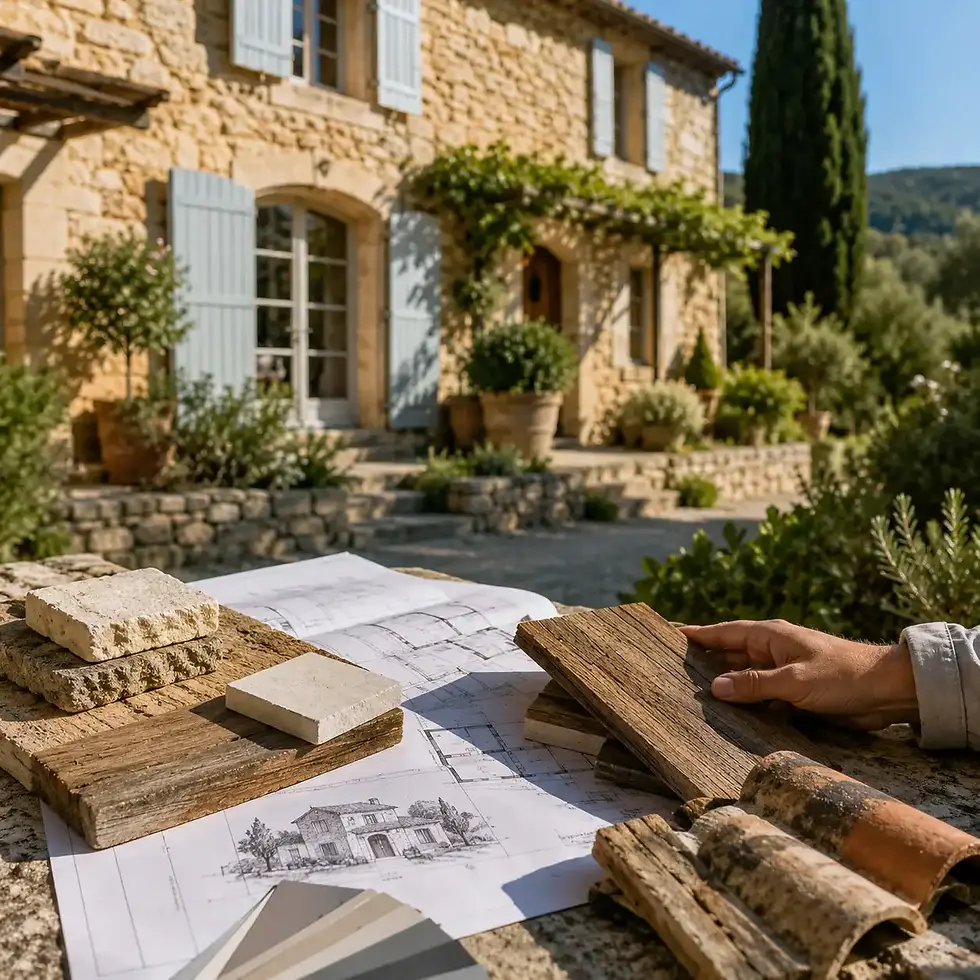
Many buyers fall in love with the charm of older Provençal homes without fully anticipating renovation budgets.
Stone houses, roofs, insulation, drainage systems or pool equipment can quickly increase long-term costs if not evaluated carefully before purchase.

Focusing Only on Purchase Price
The purchase price is only part of the real cost of owning property in Provence.
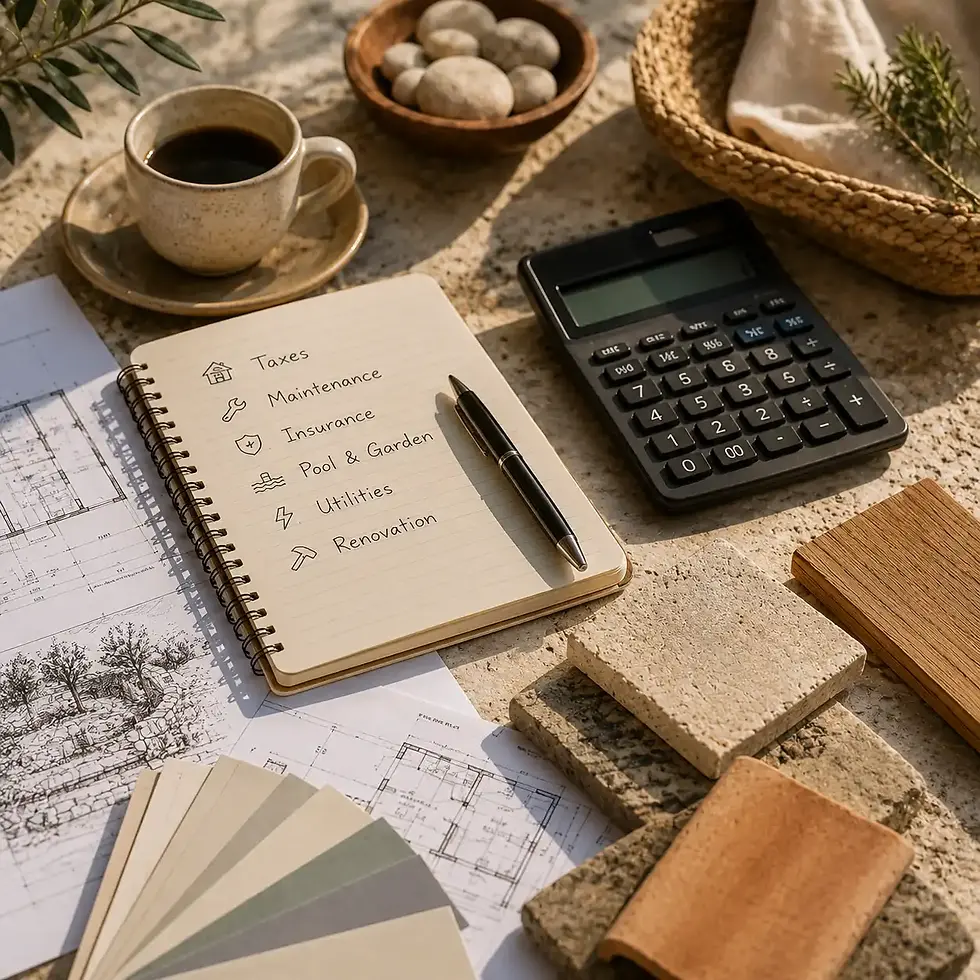
Many buyers underestimate the long-term expenses linked to taxes, maintenance, insurance, pool and garden upkeep, utilities, or future renovation work, especially for second homes that remain empty part of the year.
Assuming French Ownership Structures Work Like at Home
Some foreign buyers automatically create an SCI (Société Civile Immobilière) because they have heard it offers tax or inheritance advantages. While an SCI can be useful in certain situations, it is not always the best option. The right structure depends on your family situation, country of residence and long-term plans for the property.
👉 Considering an SCI? Read our guide on buying property in France through an SCI before making a decision.

Forgetting About Inheritance Planning
French inheritance rules can differ significantly from Anglo-Saxon systems.
For buyers purchasing family homes intended to be transmitted over time, early planning around ownership structure, inheritance and cross-border wealth organisation can become particularly important.
Do Foreign Owners Pay Property Tax?
Yes. Property tax applies regardless of your nationality or country of residence.
Whether you live in Sweden, Norway, Denmark, the Netherlands, the United Kingdom, Canada or the United States, owning property in France generally means paying Taxe Foncière each year.
This is often reassuring for international buyers because the rules are broadly the same for residents and non-residents. There is no specific annual property tax designed exclusively for foreign owners.
How Is French Property Tax Calculated?
The amount you pay depends on several factors, including the property's characteristics and the tax rates applied by the local municipality.
The calculation is primarily based on:
The cadastral rental value (valeur locative cadastrale)
Local municipal tax rates
The size of the property
The amount of land attached to it
Certain property features
Because local authorities set part of the calculation, two villas of similar value can sometimes generate very different annual tax bills.
For this reason, the most reliable way to estimate future costs is usually to request the latest Taxe Foncière notice from the seller.
How Much Property Tax Can You Expect in Provence?
While every property is different, the following figures can provide a useful indication:
Property Type | Typical Annual Taxe Foncière |
Apartment | €500–€1,200 |
Village house | €700–€1,800 |
Family villa | €1,200–€3,500 |
Large villa with pool | €2,000–€6,000+ |
These figures are only examples, but they illustrate an important point: annual property taxes in Provence are often lower than many foreign buyers initially expect.
Taxe Foncière vs Taxe d'Habitation
These two taxes are frequently confused by international buyers.
Taxe Foncière is paid by the owner of the property.
Taxe d'Habitation was traditionally paid by the occupant. Although it has largely been abolished for primary residences, it may still apply to certain second homes and holiday properties.
If you are buying a villa that will only be occupied part of the year, it is worth checking whether any local surcharges apply.
Are There Additional Taxes for Non-Residents?
One of the most common concerns among foreign buyers is whether owning a property in France will expose them to taxation on their worldwide income or overseas assets.
In most cases, the answer is no.
Depending on your situation, additional taxes may apply, including:
Rental income tax on income generated in France
Capital gains tax when selling the property
Wealth tax (IFI) for high-value French real estate holdings
While annual property tax is the most common ongoing cost of ownership, many buyers also wonder what happens if they eventually decide to sell their property. You can learn more in our guide to French Capital Gains Tax Explained for Foreign Property Owners.
Why Local Guidance Matters
Buying property abroad always involves more than simply signing documents.
Understanding local taxes, ownership obligations, administrative procedures and long-term maintenance realities can quickly become overwhelming from a distance.
This is where local support becomes particularly valuable.
At Var Villas Management, we assist foreign owners not only during the purchase process, but also with the practical side of ownership in Provence, from understanding local obligations to helping coordinate property management after acquisition.
Because in Provence, buying the property is only the beginning.
A Personal Note 💬
💡My advice
If I had one recommendation to share, it would be this: focus on the long-term reality of ownership, not only on the purchase itself.
The most successful buyers are usually those who think beyond the transaction from the very beginning.
🌍 Did you know?
For non-residents, France generally taxes only French-based property assets and French-source income — not worldwide wealth or overseas income.


Commentaires