Pool Liner Replacement: What to Know
Dernière mise à jour : 20 mai
When pool owners contact us about a liner replacement, they often expect a straightforward cosmetic intervention. In reality, our experience tells a different story. Replacing a pool liner is very often the moment when deeper technical issues reveal themselves — issues that, if ignored, can compromise the entire pool system.
In short, and this is something we see regularly in the Var: a pool liner replacement is the ideal opportunity to assess the pool as a whole, not just what is visible.
Table of Contents

1. Why Pool Liners Need Replacing
Over the years, we see pool liners deteriorate for very predictable reasons. A liner is constantly exposed to a demanding environment, and even when a pool appears well maintained, wear is inevitable. The lifespan of a pool liner depends on several factors, including water treatment, exposure to sunlight and overall maintenance. We detail these aspects more precisely in How Long Does a Pool Liner Last?, where we explain what pool owners in the Var can realistically expect over time.
From our experience, the main factors are:
💧 Continuous exposure to water treatment products
Chlorine, acid treatments and other chemicals slowly affect the liner’s flexibility and surface over time.
☀️ UV exposure and heat
Strong sunlight and high summer temperatures accelerate ageing, especially in the Var climate.
🌡️ Temperature fluctuations
Repeated expansion and contraction weaken the liner material, particularly around corners, steps and fittings.
⚙️ Mechanical stress
Daily use, cleaning equipment and water movement all contribute to gradual wear.
Typical Signs We Advise Owners to Watch For
When we inspect pools, these are the most common warning signs we identify:
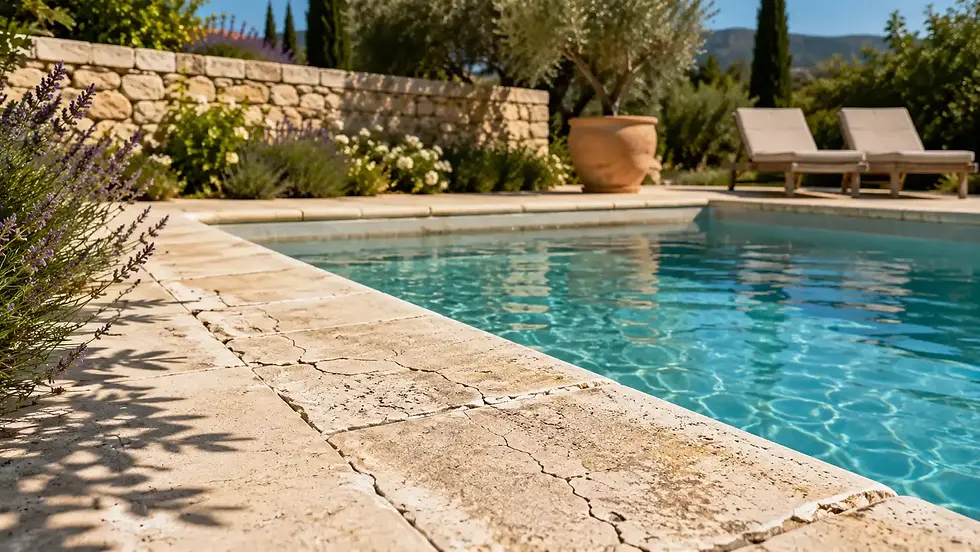
Loss of Elasticity
Over time, prolonged exposure to heat and UV rays can cause pool liners to lose flexibility. As the material becomes more rigid, it may become more vulnerable to cracks, movement and premature ageing.
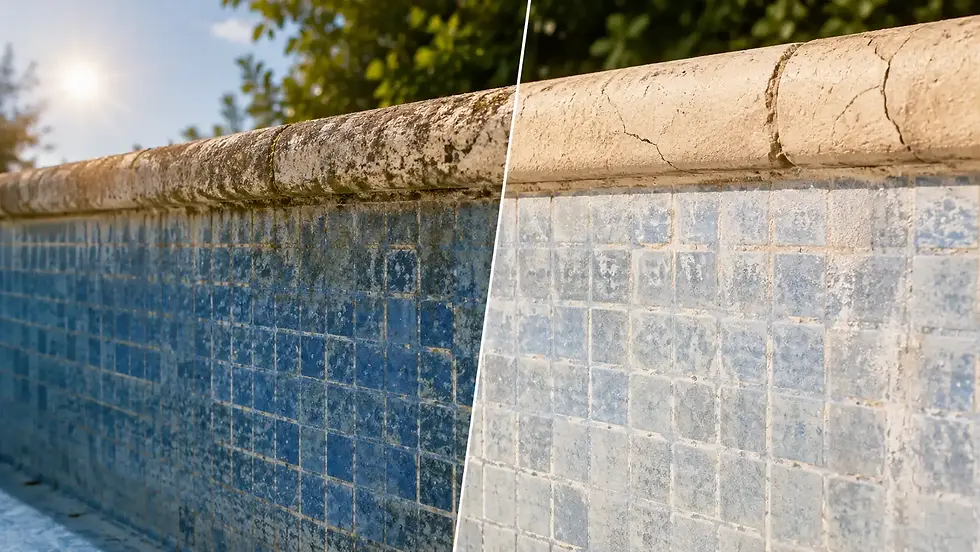
Fading and Visible Ageing
Strong sunlight and repeated chemical exposure can gradually alter the liner’s appearance. Colours often lose their depth and uniformity, giving the pool a more worn and ageing look.

Small Leaks and Poor Sealing Around Fittings
Minor leaks frequently appear around skimmers, lights, inlets and other fittings as seals deteriorate over time. Even small water losses can eventually lead to larger maintenance or structural issues if left unresolved.
These signs may appear minor at first, but they often indicate that the liner is reaching the end of its service life.
Our Professional Advice
What matters to us is not simply replacing a liner when it looks tired. We always advise understanding why it has reached this stage.
Replacing a liner without checking the surrounding elements can mean:
overlooking early pipe damage,
missing leaks behind fittings,
or postponing more serious repairs.
👉 Our recommendation is to approach liner replacement as a moment to assess the overall health of the pool, ensuring reliable performance and peace of mind for the years ahead.
2. What We Often Find Behind Liner Problems
In many cases, a damaged or leaking liner is only the visible part of the problem. From our experience, the liner often acts as a warning signal rather than the root cause itself.
When we are called to inspect a pool, certain signs immediately raise a red flag for us:
💚 Water turning green unusually fast, even after treatment
📉 Water levels dropping without clear explanation
⚙️ Filtration struggling to keep up, despite regular maintenance
When these symptoms appear together, we know that something else is happening behind the scenes.
What Our Inspections Often Reveal
Once the pool is emptied and the liner removed, we frequently discover issues such as:
🔧 Damaged or weakened pipes, particularly around skimmers
💦 Hidden leaks behind fittings or returns
🧱 Structural stress points caused by ageing materials or previous repairs
These problems are not visible during normal pool use and can remain undetected for years.
Why We Never Treat Liner Replacement as an Isolated Task
This is why we never approach liner replacement as a simple, stand-alone operation. Replacing the liner without addressing underlying issues would only delay the problem, not solve it.
👉 Our advice to pool owners is always the same: use liner replacement as an opportunity to inspect, diagnose and secure the entire system, ensuring reliable performance and avoiding unexpected repairs in the future.
3. Chemical Damage: A Real and Underestimated Risk
One issue we encounter more often than people realise is chemical damage to pool piping. Repeated use of strong products such as high-concentration acid treatments and chlorine can, over time, chemically burn pipes, especially around skimmers.
This is exactly what happened in one of our recent renovations. The skimmer pipe had been progressively damaged by chemicals, until it finally ruptured. The consequences were clear:
The filtration system could no longer function correctly
Water stagnated and turned green
The pool began losing a significant amount of water
At that point, replacing the liner alone would have solved nothing.

4. When Pipes and Skimmers Become the Real Issue
Once a liner is removed, we often gain access to areas that are normally hidden. In this case, the damage was located behind the skimmers and beneath the decking.
For us, it confirmed something we always explain to owners: leaks and filtration issues are very often linked to pipework, not just the liner itself.

5. How We Access and Repair Damaged Pipework
To reach the damaged pipe safely and properly, the skimmers had to be removed and part of the decking carefully dismantled. This kind of work requires precision, shortcuts only lead to repeat problems.
We installed a new pipe beneath the decking, restoring proper circulation and ensuring the repair was durable, not temporary.

6. Restoring Skimmers and Decking Seamlessly
Once the technical repair was complete:
New skimmers were fitted
The decking was rebuilt using matching tiles
Our objective was simple: full functionality without visual disruption. When the work was finished, the pool area looked exactly as it had before, as if nothing had been changed.

7. Cleaning, Refilling and Putting the Pool Back into Service
Before refilling, the pool needed a full reset. We drained the stagnant green water, power-washed the entire pool and carried out an acid clean to remove deposits and residue.
Only then was the pool refilled and balanced, ready to be used safely and comfortably throughout the summer.
8. Why We See Liner Replacement as a Strategic Renovation Step
From our point of view, pool liner replacement should never be seen as a simple maintenance task. It is a strategic moment to:
Inspect skimmers and pipework
Identify hidden leaks
Improve filtration performance
Prevent water loss and future failures
Addressing these elements together is far more effective than reacting to problems one by one. For many owners, pool liner replacement is often part of a broader renovation strategy. If you are considering a more comprehensive approach, we explain this in more detail in our article Renovating the Pool of Your Provence Home: What You Should Know.
9. Supporting Pool Owners in the Var
Working with pool owners in the Var, we understand the importance of reliable, discreet and long-lasting solutions, whether the property is owner-occupied or managed from a distance.
Our approach is always the same: diagnose properly, repair thoroughly, and restore the pool without compromising its appearance. That is how pool renovations should be done. As with any pool renovation, it is also important to ensure that work carried out complies with current French regulations. We regularly advise owners on these aspects, which we detail further in our article Understanding French Rules for Private Pools.
A Personal Note 💬
💡My advice
A pool liner rarely fails overnight. In most cases, visible signs such as fading, loss of flexibility or small sealing issues appear gradually over several years. Regular inspections often allow homeowners to anticipate replacement before more significant technical problems develop.
🌍 Did you know?
In warm regions like Provence, strong UV exposure and repeated temperature variations can significantly accelerate liner ageing compared to cooler climates. Two liners installed at the same time may therefore age very differently depending on sun exposure, maintenance habits and overall pool usage.


Commentaires