Salt Water Pool Maintenance in Provence: A Simple Guide for Property Owners
Dernière mise à jour : 20 mai
If your salt water pool starts to become cloudy, unstable, or harder to manage, especially during the summer, the most likely cause is simple: a lack of regular balance and monitoring, particularly pH and system performance.
Salt water pools are often seen as “low maintenance.” In reality, they are easier to manage, but not maintenance-free. And in a region like Provence, where heat, sun, and environmental factors are intense, small imbalances can quickly turn into bigger issues.
👉 Here’s a clear, practical guide to help you maintain a salt water pool efficiently, whether you live on-site or manage a second home.
Table of Contents

1. How a salt water pool really works
🌊 Not seawater, just lightly salted water
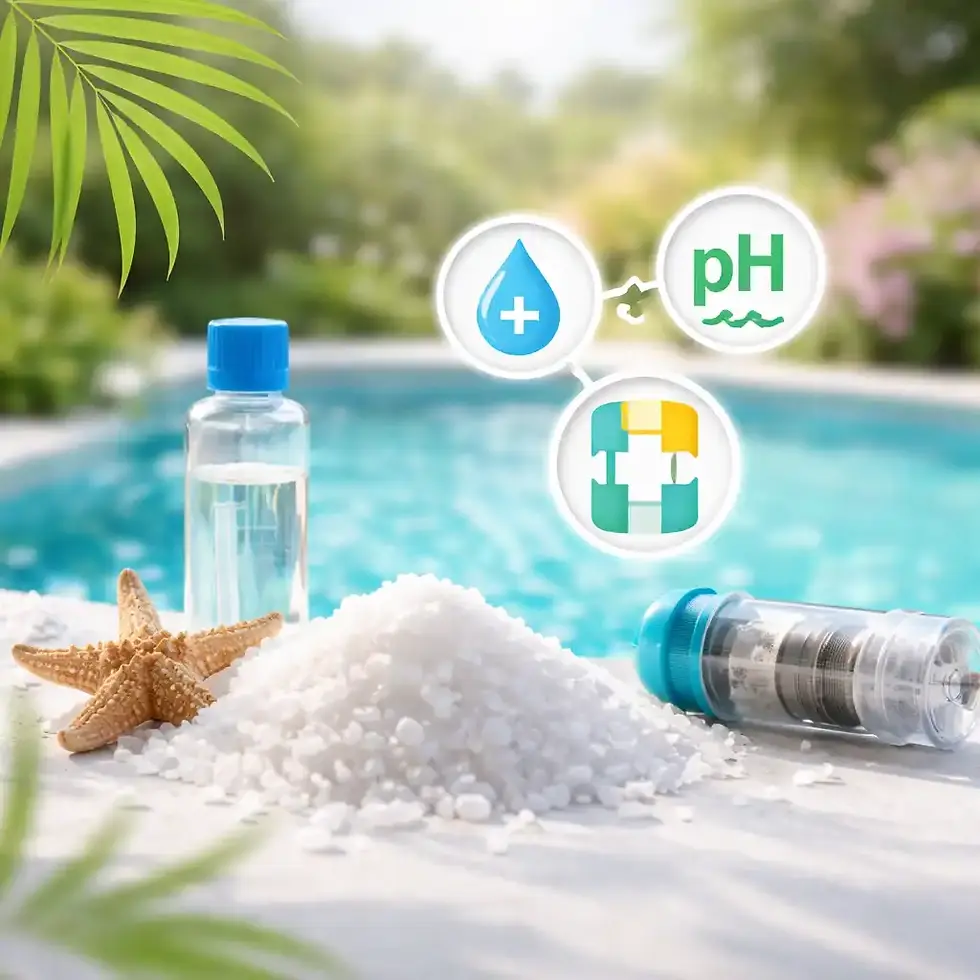
A salt water pool contains only a small amount of salt, far less than the ocean. You won’t really taste it, and the water feels soft and pleasant on the skin.

⚙️ The electrolyser is the key component
This system uses electricity to transform salt into chlorine. It runs continuously, producing disinfectant automatically as the water circulates.

🔄 A continuous, self-regulating process
Instead of adding chlorine manually, the pool generates it on its own. This creates a more stable level of disinfection over time.

🧪 Still chlorine… just produced differently
Even if it feels more natural, the pool still relies on chlorine to stay clean and safe, it’s simply generated from salt rather than added directly.

✨ More comfort for swimmers
Because chlorine levels are more stable and often lower, the water is generally gentler on the eyes and skin, with less of the typical “chlorine smell.”

🏡 Simpler day-to-day maintenance
With fewer manual adjustments needed, salt systems are particularly convenient for second homes or properties that are not occupied all the time.
👉 In short, it’s still a chlorine pool—but produced differently.
2. Why maintenance is different from traditional pools
Salt water pools simplify some aspects of maintenance, but they also introduce specific points of attention.
Because chlorine is generated automatically, you don’t need to manually dose it as often. However, this also means you must ensure that the system producing it is working correctly at all times.
Another important difference is water balance. Salt pools tend to naturally push pH upwards, especially in warm conditions. This makes regular monitoring essential, particularly in Provence where temperatures accelerate chemical reactions.
One of the key challenges with salt water pools is that pH tends to rise more easily over time. This is why understanding pool pH is essential to maintaining clear, balanced water.
👉 The system helps, but it doesn’t replace proper supervision.
3. The key elements to monitor regularly
Maintaining a salt water pool comes down to keeping a few parameters stable over time.
First, pH remains the priority. If it drifts too high, chlorine becomes less effective, even if your system is running properly. This is one of the most common sources of confusion.
Salt levels must also be checked periodically. Too little salt reduces chlorine production, while too much can affect equipment over time.
The electrolyser itself requires attention. Its cell can accumulate deposits (especially limestone in regions like Provence), which reduces efficiency. Cleaning it regularly ensures consistent performance.
Filtration and general cleaning remain just as important as in a traditional pool. Leaves, dust, and organic matter still impact water quality and overall balance.
👉 A salt system automates part of the process, but the fundamentals remain the same.
4. Common mistakes to avoid
One of the most frequent misconceptions is believing that a salt water pool runs on its own. This often leads to neglecting basic checks, especially pH and system condition.
Another common mistake is ignoring early warning signs. Slightly cloudy water, small deposits, or reduced chlorine efficiency are often dismissed—until they become harder to correct.
Over-reliance on the system is also an issue. If the electrolyser is not functioning properly, the pool can quickly lose its balance without immediate visible signs.
👉 As with any pool, prevention is always easier than correction.
5. Managing a salt water pool in a second home
In Provence, many properties are not occupied year-round. This makes salt water pools particularly attractive, but also more challenging to manage.
Without regular presence, small imbalances can develop unnoticed. Heat, wind, and environmental exposure can accelerate changes, especially during summer.
Even with automated systems, a pool left unchecked for several days can become unstable.
Even with a salt system, the fundamentals of pool care remain the same. If you want a broader overview, you can explore how to maintain your pool easily and avoid the most common mistakes.
👉 This is why regular human supervision remains essential, even with a salt system.
6. When to rely on professional support
For many property owners, especially those managing a second home, delegating pool maintenance is the most reliable option.
Companies like Var Villas Management provide ongoing monitoring and maintenance tailored to villas and estates in Provence.
This includes:
regular water testing and adjustments
inspection and cleaning of the electrolyser
full pool and equipment maintenance
rapid intervention if needed
👉 The result is consistent water quality, fewer issues, and complete peace of mind—whether the property is occupied or not.
Conclusion
Salt water pools offer comfort, automation, and a more pleasant swimming experience, but they still rely on one key principle: balance over time.
The system simplifies chlorine management
But pH, filtration, and monitoring remain essential
And in regions like Provence, regular follow-up is critical
👉 When properly maintained, a salt water pool is not only easier to manage, it becomes a true asset for your property.
A Personal Note 💬
💡My advice
In hot climates like Provence, slightly reduce the output of your electrolyser during very high temperatures, but increase monitoring frequency, as pH can rise quickly.
🌍 Did you know?
Salt water pools typically contain 10 times less salt than seawater, which is why the water feels softer and doesn’t have a strong salty taste.


Commentaires