Where is Provence in France ?
Dernière mise à jour : 20 juin
Provence is located in the southeast of France, along the Mediterranean coast, between the Rhône Valley and the Italian border. When people imagine Provence, they often picture lavender fields, hilltop villages, and golden light. But beyond these images, its exact location helps explain everything, from its climate to its landscapes and way of life.
The answer is simple… and more nuanced than it seems.
Table of Contents

Where Is Provence Located in France?
Provence is located in the southeast of France, along the Mediterranean coast.
It stretches:
from the Rhône River (near Avignon) in the west
to the Italian border in the east
and from the Mediterranean Sea up to the foothills of the Alps
👉 In simple terms: Provence sits between the sea and the mountains, in the sunniest part of France.
What Region Is Provence Part of Today?
Today, Provence is not an official administrative region anymore.
It is part of a larger region called:Provence-Alpes-Côte d’Azur (PACA)
This region includes:
Provence (historical core)
The French Riviera (Côte d’Azur)
Part of the Alps
👉 That’s why the word “Provence” is still widely used: it refers more to a cultural and historical area than to strict administrative borders.
➡️ If you want a deeper understanding of what defines Provence beyond geography, you can explore this guide:👉 What Is Provence? A Complete Guide
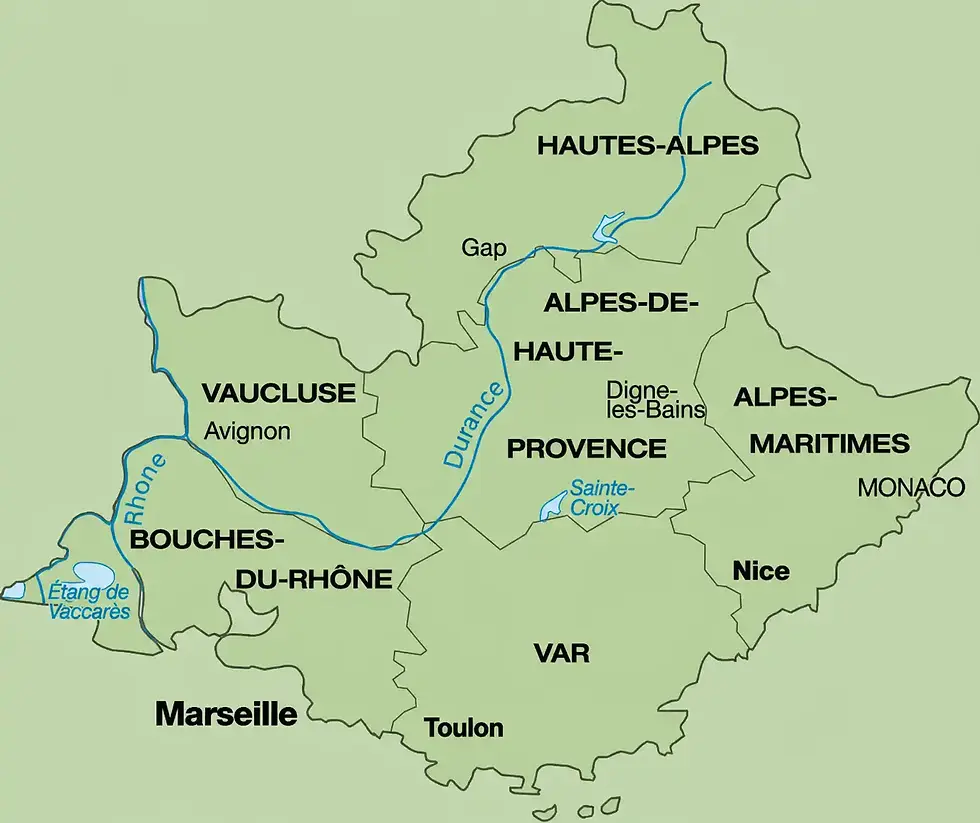
Map Overview: Understanding Provence Geographically
To better understand Provence, think in terms of natural boundaries, not just maps:
🌊 South → Mediterranean Sea
⛰ North → Pre-Alps and Alpine foothills
🌿 West → Rhône Valley
🇮🇹 East → Italian border
This positioning explains:
the climate (warm, dry, sunny)
the vegetation (lavender, olive trees, vineyards)
the lifestyle (outdoor living, slow pace)
What Are the Main Areas of Provence?
Provence is not a single uniform place — it’s made of distinct areas:

Inland Provence (Authentic & Quiet)
Villages like Fayence, Seillans, Callas
Vineyards, forests, and rolling hills
More local, less touristy
👉 This part of inland Provence reflects the same discreet appeal found across central Var — an area that has also attracted high-profile buyers such as George Clooney.

The Dracénie & Central Var
Around Draguignan, Vidauban, La Motte
A strategic location between coast and countryside
Strong real estate appeal
Travellers looking for a peaceful base to explore the region often choose this area over the busier coastal destinations.

The Verdon Area (Natural Wonders)
Famous for the Verdon Gorge
Lakes, cliffs, hiking trails
👉 One of the most spectacular natural regions in France.

The French Riviera (Côte d’Azur)
Nice, Cannes, Saint-Tropez
Beaches, luxury, international appeal
👉 The most famous — but also the most crowded — part of the region.

Aix-en-Provence & The Luberon (Iconic Provence)
Aix-en-Provence: historic city, cultural heart
Luberon: Gordes, Roussillon, postcard Provence
Highly sought-after but often crowded
👉 While these areas are the most well-known, many buyers and travellers today are increasingly drawn to quieter regions such as the Dracénie…
How Far Is Provence from Major Cities?
Provence is surprisingly accessible:
🚄 Paris → ~3 hours by high-speed train
✈️ London → ~2 hours flight to Nice or Marseille
🚗 Lyon → ~2.5 hours drive
👉 This accessibility is a key reason why Provence is so attractive for:
second homes
international buyers
tourism
Why Provence’s Location Makes It Unique
Provence’s geography is not just about location — it defines everything.
Because it sits:
between sea and mountains
between Italy and the Rhône Valley
between northern Europe and the Mediterranean
👉 It naturally became:
a cultural crossroads
a place of exchange and influence
a region with strong identity
Provence's position between the Mediterranean, Italy and the Rhône Valley has shaped far more than its landscapes. Over centuries, these influences have also helped create a rich culinary culture built around olive oil, fresh vegetables, seafood, local wines and vibrant village markets.
If you'd like to discover the dishes, ingredients and food traditions that define everyday life in the region, explore our guide to the traditional foods, local markets and flavours of Provence.
Conclusion
So, where is Provence in France?
👉 In the southeast, along the Mediterranean, but more importantly, at the crossroads of landscapes, cultures, and lifestyles. Understanding its location is the first step.But to truly grasp what makes Provence unique, its identity, atmosphere, and way of life, geography alone is not enough.
👉 And if you’re planning a trip or stay, you may also find useful answers here: Common Questions About France
A Personal Note 💬
💡My advice
If you’re planning your stay, don’t limit yourself to the coastline.
👉 Many of the most authentic experiences in Provence are found inland, often within 30 to 45 minutes from the sea, where villages, vineyards and landscapes feel far less crowded.
🌍 Did you know?
The name “Provence” comes from the Roman word Provincia.
👉 It was one of the first Roman territories outside Italy, which explains why the region still carries such a strong cultural identity today.


Commentaires