What to Know Before Planting Lavender in Your Provençal Garden
Dernière mise à jour : 20 mai
The most likely thing to know before planting lavender in Provence is this: lavender doesn’t fail here because of the climate, it fails because it is treated like a garden plant instead of a Mediterranean shrub.
Provence offers almost everything lavender needs: sun, wind, mineral soils and long dry summers. And yet, it is one of the plants we see struggle most often in private gardens. Not because it is fragile, but because it is misunderstood.
Planting lavender in a Provençal garden is less about knowing how to plant it, and more about understanding how gardening works in this region. In that sense, lavender is often the first real lesson in adapting maintenance habits to the Provençal way of life.
Table of Contents

Why Lavender Thrives in Provence and Why It Sometimes Doesn’t
Lavender feels perfectly at home in Provence. When you see it growing on open hillsides, bathed in sun and swept by the wind, it seems almost effortless. The climate, the light, the air, everything appears to be in its favour.
🌞 Lavender Needs Harsh, Dry Conditions
Lavender naturally thrives in hot, sunny, and windy environments. In Provence, open hillsides with dry air and excellent drainage create the ideal conditions for strong, healthy growth.
💧 Rich Soil Can Actually Become a Problem
Many residential gardens are heavily irrigated, enriched, or designed for lawns and ornamental plants. While this works well for other species, lavender often struggles in soil that is too rich, wet, or compact.
🌿 Lavender Prefers Simplicity
Lavender performs best in poor, well-drained soils with very little intervention. It dislikes excessive watering and usually grows more naturally when left slightly “uncomfortable” rather than overprotected.
🪨 The Best Lavender Gardens Work With Nature
Successful Provençal gardens do not try to transform the land completely. Instead, they respect the natural climate, limestone soils, and dry conditions that lavender has adapted to over centuries.
Lavender does not tolerate:
waterlogged soil,
excessive irrigation,
rich, organic substrates,
or sheltered, humid conditions.
The Most Common Mistakes New Owners Make
One thing we see again and again is lavender being treated the same way it would be in cooler or wetter regions. It’s a very natural reflex. When a plant looks a little tired, the instinct is often to water more, enrich the soil, or protect it with mulch.
In Provence, that logic rarely works.
Lavender doesn’t respond well to constant attention. Too much water, rich compost and heavy soil slowly weaken it. At first, everything seems fine. Then, after a season or two, the plant loses its strength, becomes woody, or simply fades away.
Another mistake is choosing lavender mainly for how it looks on the day of purchase. Some varieties are incredibly attractive in pots, dense, perfectly shaped, covered in flowers. But once planted, they struggle to adapt to outdoor conditions over time.
These situations are frustrating, especially when the intention was to do things “properly”. But they are not a lack of care. They’re simply a reminder that gardening here follows different rules.
In Provence, learning what not to do is often more important than learning what to do.
Soil, Drainage and the Reality of Provençal Ground
Before choosing a lavender variety, soil conditions should always be considered first.
Much of Provence sits on naturally draining, mineral soil, which suits lavender perfectly.
However, many private gardens contain:
compacted ground from construction work,
clay pockets that retain moisture,
imported topsoil designed for lawns or flower beds.
In these situations, lavender may survive its first year, then decline rapidly.
Good drainage is essential. In some gardens, this means planting on slight slopes or raised areas. In others, it means accepting that lavender is not suitable everywhere, even in Provence.
Choosing the Right Lavender Variety
Not all lavender is the same, and choosing the right type makes a significant difference over time.
Broadly speaking:
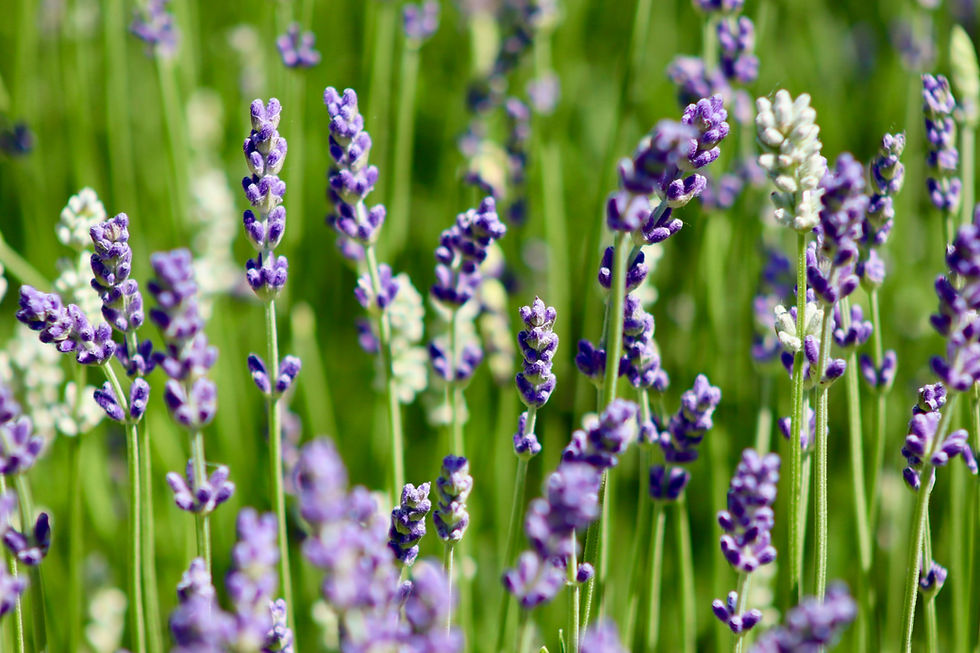
Lavandula angustifolia (True Lavender)
Known as the most traditional lavender found in Provence, true lavender is especially appreciated for its delicate fragrance and elegant appearance. It thrives best in well-drained soils and slightly cooler, drier conditions, but can be more sensitive in overly humid or rich gardens.

Lavandin (Natural Lavender Hybrid)
Lavandin is a natural hybrid between true lavender and spike lavender. More vigorous and resistant, it tolerates heat, wind, and exposed conditions particularly well, making it a common choice for larger Provençal gardens and lavender fields.
Garden centres often prioritise appearance over longevity. A plant that looks dense and floriferous in a pot may not be the best choice for long-term balance in the ground.
In Provençal gardens, durability and adaptation matter far more than first impressions.
Watering, Pruning and Long-Term Maintenance
Lavender is often described as low maintenance, but only when it is planted correctly.
Once established, lavender requires:
very limited watering,
light but regular pruning,
and plenty of air circulation.
Over-pruning or heavy reshaping can weaken the plant, while neglecting pruning altogether can lead to woody, unbalanced growth.
Maintenance here is not about control, but about observation. Lavender responds clearly to its environment. When it thrives, it often indicates that the garden as a whole is in balance, a principle we explore further in our guide on what you need to know to maintain your Provençal garden.
Lavender as a Gateway to a Provençal Garden Philosophy
Lavender is rarely an isolated plant in a Provençal landscape. It naturally connects to other emblematic species such as rosemary, thyme, cistus and olive trees. Seeing lavender grow in a private garden often changes the way people look at it in the landscape as a whole.
Once you understand how it lives, it becomes easier to appreciate it beyond the garden, in open fields, on plateaus and hillsides.
Together, these plants form gardens designed around resilience rather than constant intervention. They reflect a broader approach to garden maintenance in Provence: choosing plants that work with the climate, not against it.
For many property owners, understanding lavender becomes the first step toward rethinking their entire garden, moving away from intensive maintenance and toward long-term harmony with the land, an approach we explore further in our guide on how to choose plants for your Provençal garden.
A Personal Note 💬
💡My advice
If you’re unsure whether lavender will work in a specific part of your garden, don’t rush to plant it everywhere. Start with one or two plants, observe them over a full year, and see how they respond to rain, heat and wind. Lavender is very expressive, it quickly tells you whether it’s comfortable or not. Listening to the plant often teaches more than any guide.
🌍 Did you know?
In traditional Provençal gardens, lavender was rarely planted close to the house or in sheltered areas. It was most often placed on open ground, slopes or edges of fields, where wind and poor soil limited other plants. Its famous fragrance and resilience were never the result of intensive care, but of the exact opposite.


Commentaires