How to Choose Plants for Your Provençal Garden
Dernière mise à jour : 20 mai
Choosing plants for your Provençal garden is one of the most important decisions you will make, and often one of the most misunderstood.
Many people start with a list of plants they love. I prefer to start with questions. How exposed is the garden? How does the soil react after rain? Where does the sun linger in the afternoon? Which areas stay dry even in spring?
In Provence, a garden is shaped as much by what you don’t plant as by what you do. Over the years, I’ve seen gardens struggle not because of neglect, but because plants were chosen without fully understanding the land they were meant to live on.
A well-chosen plant does not ask for constant attention. It settles, adapts, and becomes part of the place.
Table of Contents

Understand Your Garden Before Choosing Plants
Before visiting a nursery or planting anything, I always recommend taking time to observe the garden itself.This step is often overlooked, yet it is one of the most important ones.
In Provence, two gardens only a few kilometres apart can behave very differently. A south-facing slope will dry out far more quickly than a sheltered garden behind a stone house. Land that was once cultivated does not react the same way as ground that has never been worked. These subtle differences shape everything that follows. These subtle differences shape everything that follows and play a major role in how to design a Provençal garden that feels natural, balanced, and sustainable over time
Before making any decisions, I take note of a few key elements:
🌞 Areas exposed to full sun throughout the day
These zones will heat up quickly and dry out faster, especially in summer. Plants placed here must tolerate intense sun and limited water.
🍃 Zones protected from wind
Walls, hedges, and buildings can create sheltered pockets where more delicate plants may thrive, even in a generally harsh climate.
💧 Places where water naturally drains or stagnates
Observing the garden after rainfall is often revealing. Well-drained areas suit Mediterranean plants, while stagnant zones require particular care or different plant choices.
🌿 Existing vegetation
What is already growing successfully is often the best guide. Native or well-established plants indicate what the soil and climate can support with minimal effort.
These observations form the foundation of every good planting plan. They guide plant choices far more reliably than trends or inspiration photos, and they help create a garden that feels balanced, resilient, and truly adapted to its place.
Climate and Exposure: The Real Starting Point
The Provençal climate leaves little room for improvisation.Here, the garden must adapt to the environment, not the other way around.
Summers are hot and dry, often marked by long periods without rain. Winters are generally mild, but sudden cold snaps, strong winds, and unexpected frost can quickly stress fragile plants. Choosing plants that tolerate these extremes is therefore essential.
Understanding climate and exposure helps you place each plant where it will naturally feel comfortable, reducing both stress and maintenance over time. In Provence, maintaining vegetation is not only an aesthetic concern. Certain areas are also subject to seasonal brush-clearing obligations and fire-prevention regulations.
For example:
🌞 Full sun and dry exposure
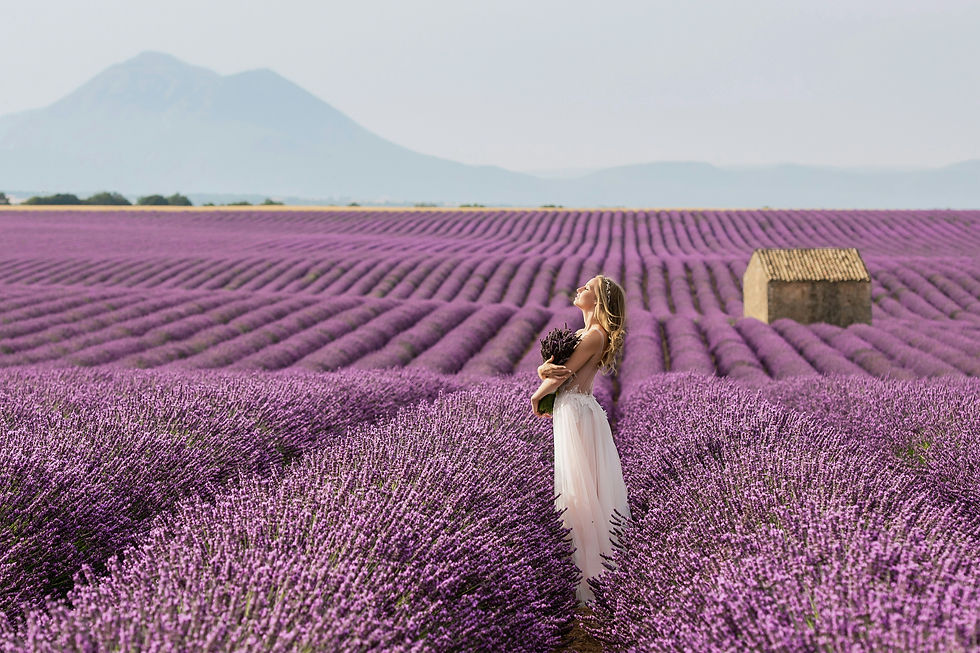
Lavender, rosemary, thyme, and sage thrive in these conditions. Planted in open, sunny areas with well-drained soil, they remain compact, fragrant, and resilient even in peak summer.
🌿 Partial shade or mixed exposure
Some plants benefit from protection during the hottest hours of the day. Fig trees, certain shrubs, and Mediterranean perennials often prefer morning sun and lighter afternoon shade.
🌬️ Wind-exposed areas
Wind can be as challenging as heat. Hardy plants with flexible branches and deep roots cope far better than fragile or broad-leaved species.
💧 Sheltered and cooler zones
More delicate plants, including citrus trees, require protection from wind and cold. They should only be planted in sheltered positions, close to walls or buildings that retain heat.
When exposure is respected, plants grow with far less intervention.They settle more easily, remain healthier, and contribute to a garden that feels balanced and sustainable, even in the most demanding Provençal conditions.

Choosing Plants for Dry, Limestone Soils
Much of Provence is characterised by stony, limestone-rich soils with excellent natural drainage. These soils may look poor at first glance, but they are actually one of the great strengths of a Provençal garden.
Rather than trying to amend them excessively or transform them into something they are not, it is far wiser to choose plants that are naturally adapted to these conditions. When soil and plants are aligned, the garden becomes more resilient and far easier to maintain.
Plants that thrive in dry, limestone soils typically share the same qualities: deep root systems, tolerance to drought, and the ability to remain stable over time.
🌿 Aromatic plants
Lavender, rosemary, thyme, and sage are perfectly suited to these soils. They appreciate good drainage, dislike excess moisture, and develop stronger aromas when grown in lean conditions.
If you are considering planting lavender, you can read our guide on what to know before planting lavender in your Provençal garden.
🌾 Mediterranean shrubs
Cistus, santolina, and rockrose bring structure and volume without demanding rich soil. Their natural forms work particularly well in open, sun-exposed areas.
🌳 Trees adapted to limestone soils
Olive trees and fig trees thrive where roots can penetrate deeply. Once established, they require very little watering and become long-term anchors of the garden.
🌱 Perennials and grasses
Plants such as phlomis, euphorbia, and certain ornamental grasses add movement and seasonal interest while remaining remarkably tolerant of drought.
These plants are not only resilient; they also age well. Over time, they settle naturally into the soil, requiring less intervention rather than more.
Trying to force plants that need rich, moist soil into dry, limestone ground often leads to disappointment — and unnecessary work. In Provence, working with the soil rather than against it is almost always the most rewarding approach.

Structuring the Garden with Trees
Trees give a Provençal garden its long-term structure. They are not chosen for quick results, but for the role they will play over decades.
An olive tree brings instant character, but it also teaches patience. It grows slowly, settles gradually, and becomes more expressive with age. A fig tree offers generous shade, fruit, and a strong seasonal rhythm, bare in winter, lush in summer, always alive. Cypress trees, when used sparingly, can mark perspectives, frame views, or gently define boundaries without dominating the landscape.
Choosing the right tree also means choosing the right place. Exposure, wind, and available space all matter. Trees should never be planted too close together. Their roots need room to expand, their canopies need air and light, and the garden itself needs to breathe.
🌳 Spacing is essential
A tree planted too close to another will compete for water and nutrients, often weakening both. In a Provençal garden, generous spacing allows trees to grow naturally and age gracefully.
🌿 Think in terms of shade, not density
Well-positioned trees create moving areas of shade throughout the day. This natural shade reduces heat stress for surrounding plants and makes outdoor spaces far more comfortable in summer.
🌬️ Trees help shape the garden’s microclimate
By filtering wind and sun, trees soften extreme conditions and make the garden more hospitable for other plants.
I always think of trees as the skeleton of the garden. Once they are in place, everything else, shrubs, perennials, and ground cover, finds its position more naturally. The garden becomes coherent, balanced, and anchored in time.

Shrubs and Perennials: Creating Rhythm Without Excess
Shrubs and perennials give volume and movement, but restraint is key.
Mediterranean shrubs work best when repeated rather than multiplied. A few well-chosen varieties used throughout the garden create harmony and visual calm.
For example:
repeating cistus or santolina along paths
grouping shrubs rather than isolating them
allowing plants to grow into their natural shape
This repetition reduces maintenance and reinforces the garden’s identity.

Aromatic Plants: More Than a Decorative Choice
In a Provençal garden, aromatic plants are part of daily life. They are not added at the end for decoration; they are integrated from the very beginning.
Lavender, rosemary, thyme, oregano, and bay laurel naturally structure the garden. They edge paths, soften terraces, and release their scents with every passing movement. These plants create a direct link between the garden and the house, between outdoor spaces and the kitchen.
Planted in full sun and well-drained soil, aromatic plants ask for very little once established. They are remarkably tolerant of heat and drought, and they tend to become stronger when conditions are a little lean rather than overly rich.
What makes them so valuable is their versatility. They are beautiful, useful, fragrant, and resilient, all at once. In Provence, few plants offer so much while asking so little in return.
Ground Cover and Bare Soil: An Often Overlooked Balance
In a Provençal garden, not every surface needs to be planted.Leaving areas of bare soil, gravel, or stone is not a lack of design, it is a deliberate and thoughtful choice.
Traditionally, Provençal gardens have always balanced planted areas with mineral spaces. Gravel paths, stone terraces, and open soil help reflect heat, improve drainage, and limit evaporation during long, dry summers. They also give the garden visual breathing room.
Ground cover plants have a very specific role. Used sparingly, they protect the soil from erosion, slow down weed growth, and soften transitions between shrubs, perennials, and paths. However, they should never dominate the space or compete with larger plants for water and light.
When this balance is right, the garden feels timeless, as if it has always belonged there, even when it has just been created.
This quiet dialogue between mineral and plant life reflects the wider landscape of Provence, a region shaped by strong contrasts between stone, vegetation, light, and terrain — something I explore in more detail in my article Provence: A Region of Contrasts and Diverse Landscapes.
Common Planting Mistakes in Provençal Gardens
Some mistakes appear again and again:
planting too densely
choosing plants based on appearance alone
overwatering in summer
introducing plants unsuited to limestone soils
These choices often lead to stressed plants and unnecessary maintenance.
Simplicity and patience almost always produce better results.
Conclusion
Choosing plants for a Provençal garden is never just a technical decision. It is about understanding a place, respecting its climate, and allowing the garden to evolve at its own pace.
This long-term vision is exactly how we approach garden design and maintenance at Var Villas Management. We work closely with homeowners to help design gardens that truly belong to their environment — and to maintain them with the same care, discretion, and attention to detail over time.
Because in Provence, a garden is not finished when it is planted. It is something that grows, matures, and deserves expert guidance to remain balanced, resilient, and enjoyable year after year.
A Personal Note 💬
💡My advice
Plant aromatic herbs where you pass by often — along paths, near terraces, or close to the kitchen. Regular contact naturally releases their fragrance and helps keep the plants compact without heavy pruning.
🌍 Did you know?
Many aromatic plants produce more essential oils when grown in poor, well-drained soil. In Provence, slightly stressed plants are often more fragrant than those grown in rich, heavily watered ground.



Commentaires