Provence: A Region of Contrasts and Diverse Landscapes
- Jennifer
- 3 févr.
- 6 min de lecture
Dernière mise à jour : 17 avr.
When people ask me what Provence looks like, I often hesitate. Not because I don’t know the region well — quite the opposite. The difficulty comes from the fact that Provence cannot be summed up in a single image or atmosphere. It’s not one landscape, but a succession of very different ones, sometimes encountered within just a short drive.
Over time, I’ve realised that this diversity is what shapes the experience of Provence most deeply. More than beauty itself, it’s the contrast — and the way you move through it — that defines the region.
Contents
A Region Defined by Movement Rather Than Views
What I find striking about Provence is how quickly things change. You don’t settle into one scenery for long before something else takes over. A familiar road suddenly opens up. The light shifts. The landscape tightens, then expands again. Sometimes it happens within a few minutes, without any clear transition.
I see Provence less as a place to “look at” and more as a place you move through. It doesn’t reveal itself in fixed viewpoints or iconic panoramas, but in what happens between them. You notice it while driving, walking, or even running simple errands. The experience is continuous, not staged.
Over time, this movement creates a rhythm. You start to anticipate it without thinking about it. You know that a bend in the road will change the atmosphere, that a slight change in elevation will bring different light, different vegetation, a different feeling altogether. Provence doesn’t ask for your attention, it earns it gradually.
What I find particularly interesting is how this constant transition affects perception. You stop trying to “capture” the region in images. Instead, you experience it as a sequence of moments. The landscape becomes something you pass through and adapt to, rather than something you consume.
In many ways, this is what makes Provence so easy to live in over time. There is always movement, but rarely disruption. Change feels natural, not abrupt. And once you get used to that rhythm, it becomes part of your daily life, something you feel, even when you’re not consciously thinking about it.
Space, Scale, and Breathing Room
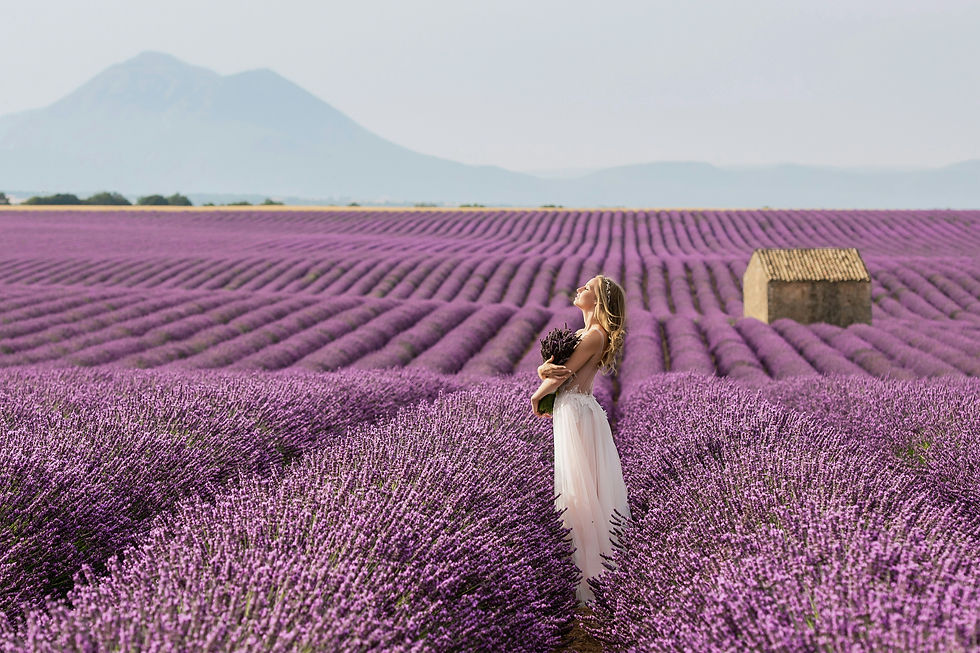
Some parts of Provence offer an immediate sense of space. Wide horizons, open land, and skies that seem to stretch endlessly. These landscapes don’t demand attention, they invite pause. You don’t feel pushed to move forward; you feel allowed to stop.
I’ve noticed that in these open areas, time behaves differently. You don’t rush. You adjust without even realising it. Movements slow down, thoughts settle. The land seems to set the tempo, and you instinctively fall in step with it.
What strikes me is how physical this feeling can be. Space isn’t just something you see here, it’s something you feel. Breathing feels deeper. Distances feel less pressing. Even simple moments, like driving or walking, take on a quieter rhythm.
These open landscapes are also a reminder that Provence is deeply connected to natural cycles. Light changes the mood of a place, seasons alter its character, and nothing tries to stay the same for long. Even if you’re not consciously thinking about it, you start living in tune with these shifts.
Over time, this sense of space becomes more than a visual experience. It becomes a way of being. And once you’ve felt it, it’s hard not to notice how rare that kind of breathing room really is.
Landscapes Shaped by Everyday Life
Elsewhere, Provence feels more contained, more structured. Cultivated hills, long-established villages, and agricultural land create a quieter, more grounded atmosphere. This is the Provence I associate most closely with daily life.
Nothing here feels staged. Roads follow the terrain naturally, and villages sit where they make sense. This balance between land and life is particularly visible in the villages of the Pays de Fayence, where everyday life remains closely connected to the surrounding landscape.
What defines this everyday Provence, at least from my experience, is a series of small, almost unremarkable details:
🌿 Fields that are worked, not decorated
🏡 Villages that feel lived in, not frozen in time
🚶 Short distances that encourage routine rather than rush
🌞 A rhythm shaped by daylight more than by schedules
It’s a Provence that doesn’t reveal itself all at once. You understand it gradually, through habit rather than spectacle. And over time, that quiet consistency becomes one of its greatest strengths.
When the Landscape Becomes More Dramatic
Then, sometimes without warning, the landscape changes character completely. Stone, water, and depth take over. Provence shifts from something familiar and gentle to something more intense. Places like the Verdon Gorges: A Perfect Provençal Experience introduce a form of tension that feels almost physical.
What always strikes me is how different these environments feel depending on how you approach them. From a distance, they appear imposing, even overwhelming. The scale is hard to grasp, the contrast abrupt. But once you’re inside them, closer to the water, along the rock faces, everything changes. The space feels tighter, more intimate, sometimes even reassuring.
I’ve come to realise that this is another way Provence plays with perception. The same place can feel vast or contained, powerful or calm, depending on where you stand. Scale is never fixed here. It’s constantly shifting, and that shift keeps your relationship with the land alive.
These dramatic landscapes don’t dominate Provence, they punctuate it. They remind you that beneath the softer rhythms of everyday life, there is also depth, force, and a much older story written into the stone.
The Discreet Strength of Inland Provence
Some of the places I feel most attached to are not the ones people talk about most. Inland areas, wooded zones, and quieter valleys don’t seek attention, yet they offer a rare sense of balance.
These landscapes don’t impress immediately, they settle in over time. I’ve noticed that people who spend longer in Provence often end up gravitating toward these more discreet areas. They offer continuity, calm, and a form of permanence that becomes increasingly valuable.
Living Between Different Worlds
One of the things I personally appreciate most about Provence is how easily you move between very different environments. Coast, countryside, hills, villages, none feel isolated from the others.
That proximity changes the way you live here. You don’t need to choose one identity over another. Variety becomes part of everyday life rather than something reserved for weekends or holidays.
How These Contrasts Shape the Way You Live
Over time, I’ve realised that Provence’s landscapes influence behaviour as much as perception. Distances feel reasonable. Decisions feel less rushed. There’s no urgency to experience everything at once.
Provence rewards patience. The more you accept its contrasts, rather than trying to organise them, the more natural life here feels. This relationship between land and rhythm is also visible in the region’s craftsmanship, from agriculture to perfume-making in Grasse, the perfume capital of the world, where natural resources are transformed with precision and restraint.
Conclusion: Provence as a Whole, Not a Highlight Reel
Provence is not a collection of isolated sights. It is a coherent region made up of contrasts that work together. Its landscapes do not compete, they complement each other, creating a balance that only becomes clear over time.
This is something we experience every day. To truly understand Provence, you don’t need to go everywhere or see everything. What matters is paying attention to how the land unfolds, how quickly it changes, and how easily different landscapes connect. Often, just a short drive is enough to move between very different atmospheres.
Seen this way, Provence is not only a destination. It is also a place where people choose to settle, sometimes gradually, sometimes unexpectedly. The quality of life, the diversity of landscapes, and the region’s accessibility make it a natural choice for those looking for more than a short stay.
Beyond the lifestyle aspect, Provence has also proven to be a resilient and long-term investment area. Its enduring appeal, limited availability of land in certain sectors, and constant demand, both local and international, contribute to its stability over time.
When Provence is approached as a whole, it stops feeling like a highlight reel and starts to make sense as a place to live, to return to, and to invest in, quietly, thoughtfully, and for the long term.
A Personal Note 💬
💡My advice
If you want to experience Provence’s more dramatic landscapes, I’ve learned that how you approach them matters as much as where you go. Take the time to change perspective: look from above, then get closer; walk, don’t just observe; arrive early or later in the day. These places reveal far more when you slow down and let the scale adjust naturally.
🌍 Did you know?
Some of Provence’s most impressive landscapes don’t feel dramatic at first glance. I was surprised to realise how often it’s only once you’re inside them — closer to the rock, the water, or the relief — that their true character becomes clear. In Provence, scale is something you experience, not something you see immediately.


Commentaires