Why Grasse Is the Perfume Capital of the World
Dernière mise à jour : 17 avr.
For centuries, perfume has been associated with luxury, elegance, and emotion. Yet behind some of the world’s most iconic fragrances lies a discreet Provençal town whose influence extends far beyond its size.Grasse is not simply linked to perfume, it is where modern perfumery was shaped, refined, and passed down through generations.
Understanding why Grasse is considered the perfume capital of the world means exploring a unique combination of geography, history, agriculture, and human expertise, all deeply rooted in Provence.
Table of contents

1. A land that naturally invites fragrance
Grasse sits between the sea and the Provençal hinterland, and that position changes everything. When you spend time here, you quickly understand how the climate, altitude, and light shape the land.
This diversity of landscapes, which we often talk about when describing Provence as a region of contrasts, allows aromatic plants to grow slowly and develop remarkable depth.
Nothing feels rushed here. Flowers follow the rhythm of the seasons, and that patience is at the heart of everything that comes after.
Grasse sits between the Mediterranean coast and the Provençal hinterland, a position that perfectly illustrates the diversity of landscapes that define Provence.
2. How Grasse turned necessity into art
What many people don’t know is that Grasse did not start as a perfume town. It was once known for leather production. To mask unpleasant odors, local craftsmen began scenting gloves with aromatic plants.
That simple idea changed everything.
Over time, scented gloves from Grasse became sought after across Europe. Flowers replaced leather, and perfume slowly became the town’s true calling. What began as a practical solution turned into a refined craft, and eventually, into an international reference.
3. Flowers that shaped the town’s identity
Perfume in Grasse has always begun far from laboratories and shop windows. It starts in the fields, on agricultural land shaped by seasons, climate, and patience. These are not ornamental gardens designed for visitors, but working plots cultivated with precision, where every decision, from planting to harvest, has a direct impact on the final scent.
For generations, local growers have adapted their practices to the land, understanding that fragrance quality depends as much on soil and weather as on human expertise.
The flowers behind Grasse’s reputation
Among the most emblematic flowers grown for perfumery, several have played a defining role in the town’s identity:
Jasmine, prized for its sensual and complex aroma
Rose centifolia, often called the “May rose,” delicate and richly nuanced
Orange blossom, fresh, luminous, and deeply Mediterranean
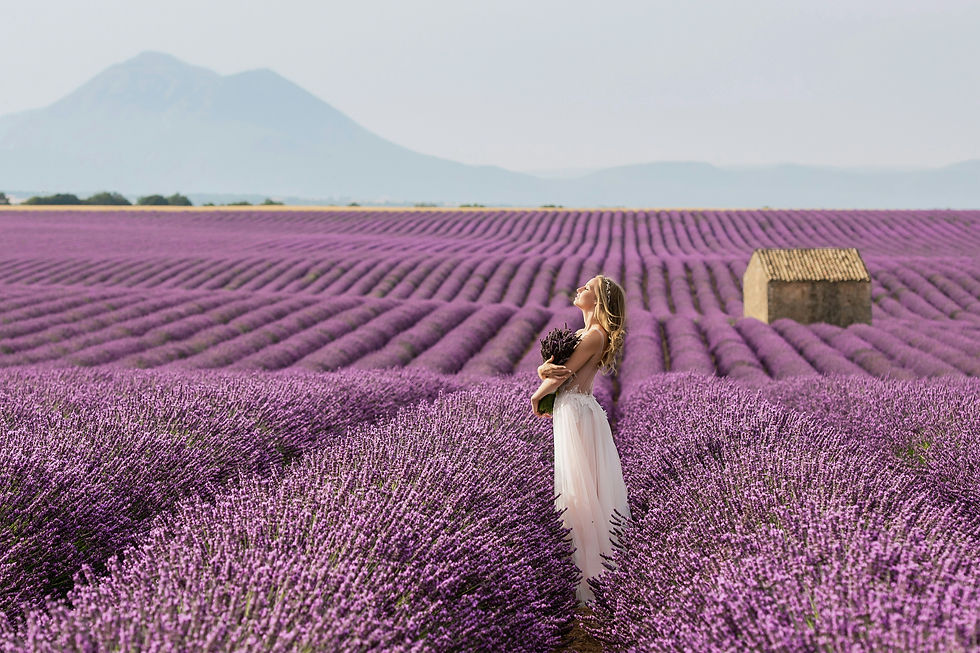
Lavender, valued for its balance, structure, and aromatic clarity
Beyond these iconic flowers, the region also reveals other seasonal expressions of fragrance and color, such as the mimosa in Tanneron, which transforms the hills into a vibrant golden landscape during winter.
Each of these flowers requires specific conditions and harvesting methods. Their cultivation is demanding, seasonal, and entirely dependent on natural cycles.
The special role of lavender
Lavender holds a particular place in Provençal perfumery. Grown inland, where altitude and dry soils allow the plant to develop slowly, it is typically distilled shortly after harvest to preserve its aromatic integrity.
Lavender, widely cultivated in inland Provence, remains one of the emblematic raw materials used in perfumery.
Rather than dominating a fragrance, lavender often acts as its backbone, bringing freshness, structure, and balance. Its presence is subtle but essential, which explains why it remains a cornerstone of both traditional and contemporary compositions.
Timing, precision, and patience
In Grasse, harvesting is never rushed. Flowers are picked at precise moments, when aromatic compounds reach their optimal concentration. There is no shortcut — the quality of the scent depends entirely on when and how the flowers are harvested.
This attention to timing reflects a broader philosophy shared across Provençal agriculture: working with nature rather than against it. It is this mindset, more than any technique, that has allowed Grasse to build its reputation over centuries.
4. A savoir-faire passed down through generations
What truly makes Grasse unique is not just its flowers, but the people behind them. Distillers, perfumers, and craftsmen here have passed down techniques for generations.
Long before modern laboratories, Grasse perfected methods like steam distillation and enfleurage. These techniques were born from observation, trial, and deep respect for raw materials.
Even today, perfume creation here feels like a dialogue between nature and human intuition.
5. Grasse today: between heritage and modern creation
Grasse has never stopped evolving. Traditional know-how now exists alongside innovation, research, and contemporary perfumery.
This balance is one of the reasons the know-how linked to perfume in the Pays de Grasse has been recognized as UNESCO Intangible Cultural Heritage. It acknowledges not just a product, but a living culture.
Grasse remains a place where perfume is taught, created, and understood — not as a trend, but as a craft.
6. Perfume as a reflection of Provençal life
Here, perfume is not disconnected from everyday life. It reflects a way of living rooted in agriculture, seasons, and landscape.
To understand Grasse is to understand Provence itself — how nature, patience, and human skill come together to create something lasting.
Final thoughts
This close relationship between land, agriculture, and craftsmanship is something we see every day in inland Provence. Understanding these rhythms — when to harvest, where quality truly comes from, and why certain areas matter more than others — is part of what makes this region so unique.
At Var Villas Management, this same attention to place and authenticity guides the way clients are accompanied. Whether discovering lesser-known areas, staying longer in the countryside, or considering a long-term project in Provence, the goal is always the same: helping people connect with the region beyond the surface — and experience it as it truly is.
A Personal Note 💬
💡My advice
If you’re hoping to catch Rosa centifolia in bloom in the Pays de Fayence, timing really matters. I’ve learned not to rely on fixed dates. Some years, the flowers appear earlier; other years, a cooler spring delays everything. My advice is simple: keep an eye on the landscape in late May, drive the small rural roads, and be curious. The rose fields don’t announce themselves — they reward attention.
🌍 Did you know?
Rosa centifolia flowers are often harvested very early in the morning. That’s when their fragrance is at its most intense. I was surprised the first time I learned this — the rose’s scent actually fades as the day warms up. It’s a reminder that with this flower, everything is about precision and respect for its natural rhythm.


Commentaires