The Mimosa in Provence: Winter Gold from Tanneron
Dernière mise à jour : 17 avr.
I’ve often been asked what Provence feels like outside the summer months.And every time, my thoughts drift to January mornings in Tanneron, when the air is crisp, the light is low, and suddenly — almost unexpectedly — the hills turn yellow.
The first time I discovered the mimosa in bloom here, I wasn’t prepared. Provence in winter is usually calm, muted, introspective. Then, just after the New Year, Tanneron lights up. Not loudly. Not dramatically. But with a quiet confidence that feels deeply Provençal.
This is the Provence I love sharing — the one you don’t always see on postcards.
Table of contents

1. Discovering Mimosa in Provence
I still remember my first walk through the Massif de Tanneron, in the heart of winter.Nothing had prepared me for that moment. The landscape felt quiet, almost suspended — bare branches, cool shadows, muted tones. And then, suddenly, the yellow appeared. Soft at first, almost shy, before spreading across the hillsides like light returning.
The contrast was striking.Not dramatic, not overwhelming, just deeply reassuring.
Mimosa doesn’t wait for spring. It announces itself early, confidently, when most landscapes are still resting. That’s what makes it so special here. Its scent, delicate, slightly powdery, drifts in the air and follows you long after you’ve left the path, lingering like a memory rather than a perfume.
In Provence, mimosa feels less like a flower and more like a mood.
It evokes:
🌼 The promise of light, even in the heart of winter
In January, when days are still short and the air remains cool, mimosa changes the way light is perceived. Its yellow doesn’t shout — it reflects. Walking among these flowering hills, I often feel as though winter loosens its grip, not abruptly, but gently. The landscape brightens, and with it, the sense that spring is already on its way.
🌿 A slower rhythm, attuned to nature rather than calendars
Mimosa never blooms on command. Each year, its timing shifts slightly, reminding me that life here follows natural cycles, not schedules. In Tanneron, winter walks replace summer rush, and days seem shaped by weather, light and scent rather than hours. It’s a rhythm that feels intuitive — and once experienced, difficult to let go of.
☀️ A gentle optimism, subtle but unmistakable
There is nothing spectacular or theatrical about mimosa. And yet, it leaves a lasting impression. Its presence is comforting, almost reassuring — a quiet reminder that beauty doesn’t always announce itself loudly. I often think this understated optimism is one of Provence’s greatest luxuries.
What I love most is the way it changes how you walk. You slow down. You look up. You breathe differently. Provence, in that moment, doesn’t feel like a destination — it feels like a presence.
2. Tanneron, a Village Shaped by Mimosa
Tanneron isn’t simply a place where mimosa grows. It’s a village that lives with it.
Perched above the Esterel massif, Tanneron feels both elevated and intimate. Narrow roads wind through hills entirely covered with mimosa trees, some cultivated, others growing freely. In winter, the village seems wrapped in yellow.
What I love here is how natural it feels. Mimosa isn’t staged or ornamental. It belongs to the landscape, just like olive trees belong elsewhere in Provence. Generations of growers have shaped these hills, adapting the plant to the local soil and climate.
Standing here on a clear day, you can sometimes glimpse the Mediterranean in the distance — a reminder of how close sea, mountains and villages truly are in this part of the Var.
The scent of mimosa is never aggressive. It stays with you quietly — on your clothes, in your memory.
It’s no coincidence that this floral culture resonates so strongly with nearby Grasse. For centuries, flowers like mimosa, rose and jasmine have shaped the identity of the region. Mimosa is part of a broader floral culture here. For centuries, flowers like mimosa, rose and jasmine have shaped the identity of the region. I explore this connection further in Why Grasse Is the Perfume Capital of the World, a place where flowers are not just grown, but transformed into heritage.

3. When Mimosa Blooms — and Why Timing Matters
One thing I’ve learned over the years: mimosa never follows an exact calendar.
Generally speaking:
Late January to February is the most reliable period around Tanneron
Higher altitudes bloom slightly later, often into early March
Each year is a little different, which is part of the charm. I often recommend staying flexible, allowing time to explore rather than chasing a precise date. Mimosa rewards curiosity, not schedules.
4. Walking the Route du Mimosa
Tanneron is one of my favourite stops along the Route du Mimosa, a journey that links several villages between the Var coast and Grasse.
Driving or walking this route feels like travelling through different layers of Provence:
coastal influences give way to forested hills
light changes with altitude
scents evolve as you move inland
It also creates a beautiful dialogue with other Provençal icons:
the floral heritage of Grasse, the perfume capital
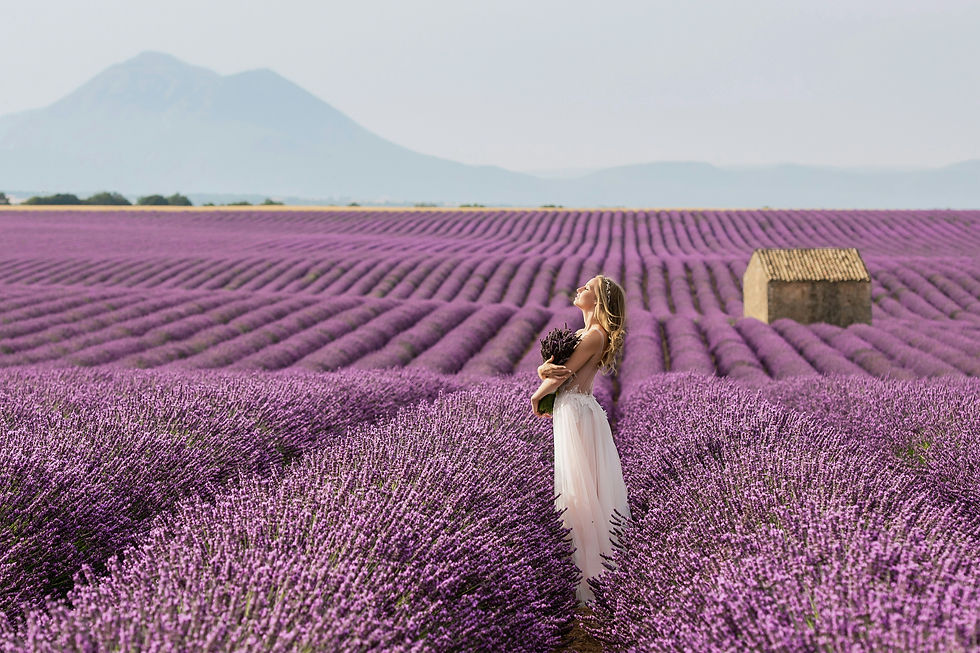
the lavender landscapes further north
and the timeless Mediterranean art of living
Each flower tells a different chapter of the same story.
I often think of mimosa as the first act — the one that quietly opens the year. As the seasons unfold, the landscape continues to evolve, revealing different textures, colors, and atmospheres across Provence. From winter blooms to sunlit fields and water-shaped environments, each moment offers a new way to experience the region. You can explore this broader natural diversity in our article on natural wonders of the Pays de Fayence, which brings together some of the most distinctive landscapes shaped by these seasonal changes.
5. Living with the Seasons in the Pays de Fayence
What often surprises visitors is how livable this area feels, not just during peak season, but throughout the year.
Tanneron sits at the gateway to the Pays de Fayence, a region I know well and have grown deeply attached to over time. Life here doesn’t rush forward — it unfolds. The seasons don’t compete with one another; they take turns, each bringing its own atmosphere, its own pleasures.
Here, the year is shaped gently:
🌼 Winter walks among mimosa, when light returns earlier than expected and silence feels restorative
🌿 Spring markets and terraces, when villages awaken and conversations stretch a little longer
🌙 Summer evenings cooled by altitude, offering relief from the coastal heat without losing the Provençal spirit
🍂 Autumn colours and quiet villages, when the landscape softens and life slows again
What I appreciate most is the balance. Mimosa season brings visitors, curiosity and movement — but never crowds. The area remains alive without becoming overwhelming. It’s an important nuance, especially for those imagining more than a short stay.
Living here is not about escaping the world, but about choosing a rhythm that feels sustainable, grounded, and deeply connected to the land.
Conclusion
This is precisely the Provence we believe in at Var Villas Management.
We are a family rooted in this region, living here year-round, walking these paths, watching the seasons change — not from afar, but from within. Our connection to the Pays de Fayence is not theoretical; it’s lived, shared, and renewed every day.
When we accompany clients who dream of settling in Provence, it’s never just about a property. It’s about a way of life — about light in winter, shade in summer, silence when it matters, and beauty that doesn’t fade with the seasons.
Mimosa in Tanneron is one of those quiet moments that says it all. And for those who recognise themselves in this rhythm, Provence often feels less like a destination… and more like home.
A Personal Note 💬
💡My advice
📅 Best period: late January to mid-February, though flowering varies each year depending on weather.
🚗 Take your time: roads around Tanneron are narrow and winding — the journey is part of the experience.
👟 Walk whenever possible: short forest paths reveal viewpoints and scents you’ll miss from the car.
📷 Light matters: early morning or late afternoon enhances the golden tones and soft contrasts.
🌍 Did you know?
🌼 Mimosa was introduced to Provence in the 19th century and found ideal growing conditions in the hills around Tanneron.
🌿 The Massif de Tanneron is now the largest mimosa-growing area in France, shaping both the landscape and local traditions.
👃 Its soft, powdery scent has long inspired perfumers, creating a natural link with nearby Grasse and its floral heritage.



Commentaires