Why Your Pool Looks Perfect in June and Turns Green in August
Dernière mise à jour : 5 août
It is one of the most common frustrations for villa owners in Provence.
In June, the water is crystal clear. The pool looks perfect, the filtration system appears to be working properly and everything seems under control.
Then August arrives.
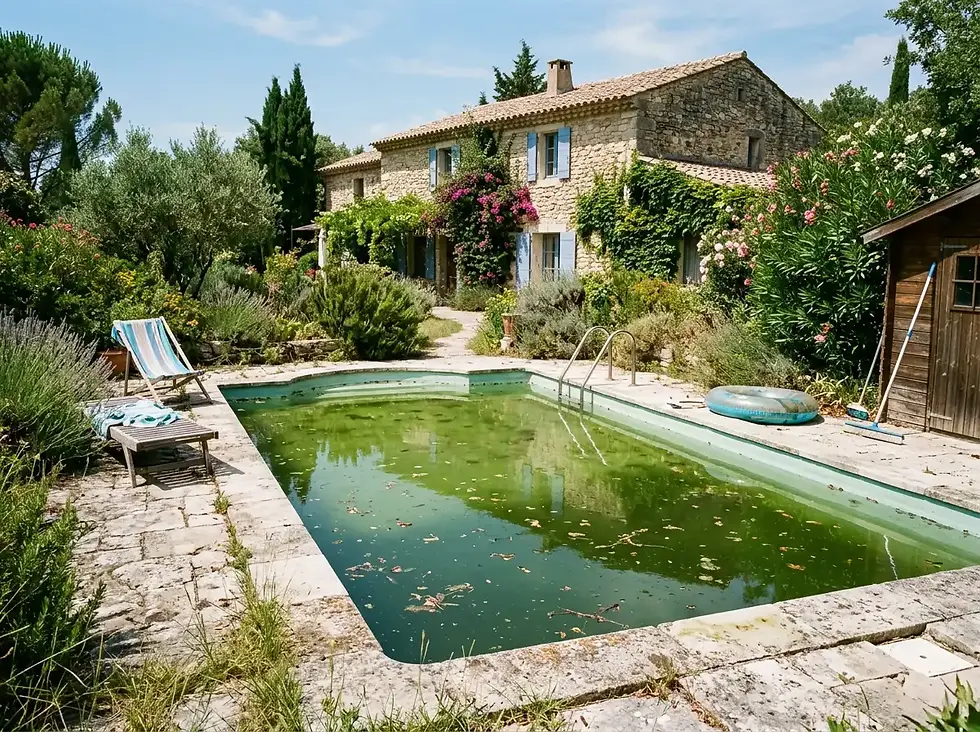
Temperatures soar, the pool is used more frequently and, sometimes almost overnight, the water begins to lose its sparkle. In some cases, it even turns green. Many owners assume that something has suddenly broken. In reality, the problem often starts weeks earlier.
August simply places more stress on a swimming pool than any other month of the year. Understanding why can help prevent many of the most common pool problems experienced across Provence during the height of summer.
Table of Contents
August Is a Completely Different Environment for Your Pool
A pool that looks perfect in June is not necessarily healthy enough to survive August.
The conditions are completely different.
During the hottest weeks of summer:
Water temperatures increase significantly.
Filtration systems work harder.
Water evaporates more quickly.
Chemical balance changes faster.
Algae develop much more rapidly.
The challenge is that these changes often happen gradually. The pool may still appear clear while conditions are slowly becoming favourable for algae growth.
By the time the water turns cloudy or green, the imbalance has usually been developing for days or even weeks.
Heatwaves Accelerate Everything
Provence regularly experiences periods of intense summer heat.
While most people focus on air temperature, the real issue is often water temperature.
Warm water creates the perfect environment for algae and bacteria to multiply.
At the same time, chlorine becomes less effective and is consumed more quickly.
This means that a pool which required very little attention in June may suddenly need much closer monitoring during August.
A single week of extreme heat can dramatically change water conditions.
More Swimmers Means More Stress on the Water
Summer is often when families, friends and guests gather around the pool.
While this is exactly what a pool is designed for, increased use creates additional challenges.
Every swimmer introduces:
Sunscreen
Body oils
Cosmetics
Sweat
Organic matter
The filtration and treatment systems must constantly remove these contaminants.
The more people using the pool, the harder those systems need to work to maintain water quality.
This is one reason why pools at rental properties often require more frequent monitoring during peak season.
The Small Mistakes That Become Big Problems
Green water rarely appears because of one major mistake.
More often, it results from several small issues occurring at the same time.
For example:
The filtration system runs slightly too few hours.
Chlorine levels drop temporarily.
A heatwave arrives unexpectedly.
Water levels fall due to evaporation.
Pool maintenance is postponed for a few days.
Individually, these issues may not seem serious.
Combined, they can create ideal conditions for algae growth.
This is why many owners are surprised when a pool that looked perfectly healthy suddenly develops problems. In many cases, the root cause is not the algae itself but an underlying imbalance in the water. Understanding how pool chemistry works is often the first step towards preventing these issues. Our guide on pool pH and water balance explains why even small variations can have a significant impact on water quality.
Why Pools in Second Homes Are More Vulnerable
Owners of second homes face an additional challenge. Unlike a primary residence, the pool is not always observed every day. A problem that would normally be spotted quickly can go unnoticed for several days or even weeks.
Common examples include:
A filtration system that stops working correctly.
A clogged skimmer basket.
Falling disinfectant levels.
Changes in water balance.
Early signs of algae growth.
The longer these issues remain undetected, the more difficult and expensive they can become to correct. This is one of the reasons why swimming pools in second homes often require a different approach than those used year-round. If your property remains vacant for extended periods, our article on pool care for second homes in Provence explores some of the additional challenges owners should anticipate.
This is particularly important during July and August, when pool conditions can change very quickly.
Prevention Is Much Easier Than Recovery
The good news is that most green pools are preventable. The key is consistency : regular monitoring during summer is often far more effective than trying to fix a problem after it appears.
Simple actions can make a significant difference:
Regular water testing.
Visual inspections.
Monitoring water levels.
Ensuring filtration operates correctly.
Responding quickly to small changes.
Once algae become established, restoring water quality usually requires more time, more chemicals and more expense than preventing the problem in the first place.
Conclusion
When a pool turns green in August, it is rarely because of a single event.
More often, it is the result of rising temperatures, increased pool usage and small imbalances that gradually build up during the busiest part of the season.
Understanding how summer conditions affect your pool is the first step towards preventing these issues and enjoying crystal-clear water throughout the year.
A Personal Note 💬
💡My advice
Many pool problems that appear in August actually begin during late June or July. A pool that looks clear is not necessarily a pool that is properly balanced. Regular checks throughout the season are often the simplest way to avoid unpleasant surprises later in the summer.
🌍 Did you know?
Algae can begin developing long before the water visibly turns green. In many cases, the first signs are slightly reduced water clarity or surfaces becoming a little more slippery than usual.


Commentaires